- Your cart is empty
- Continue Shopping


Price range: $45.00 through $127.00
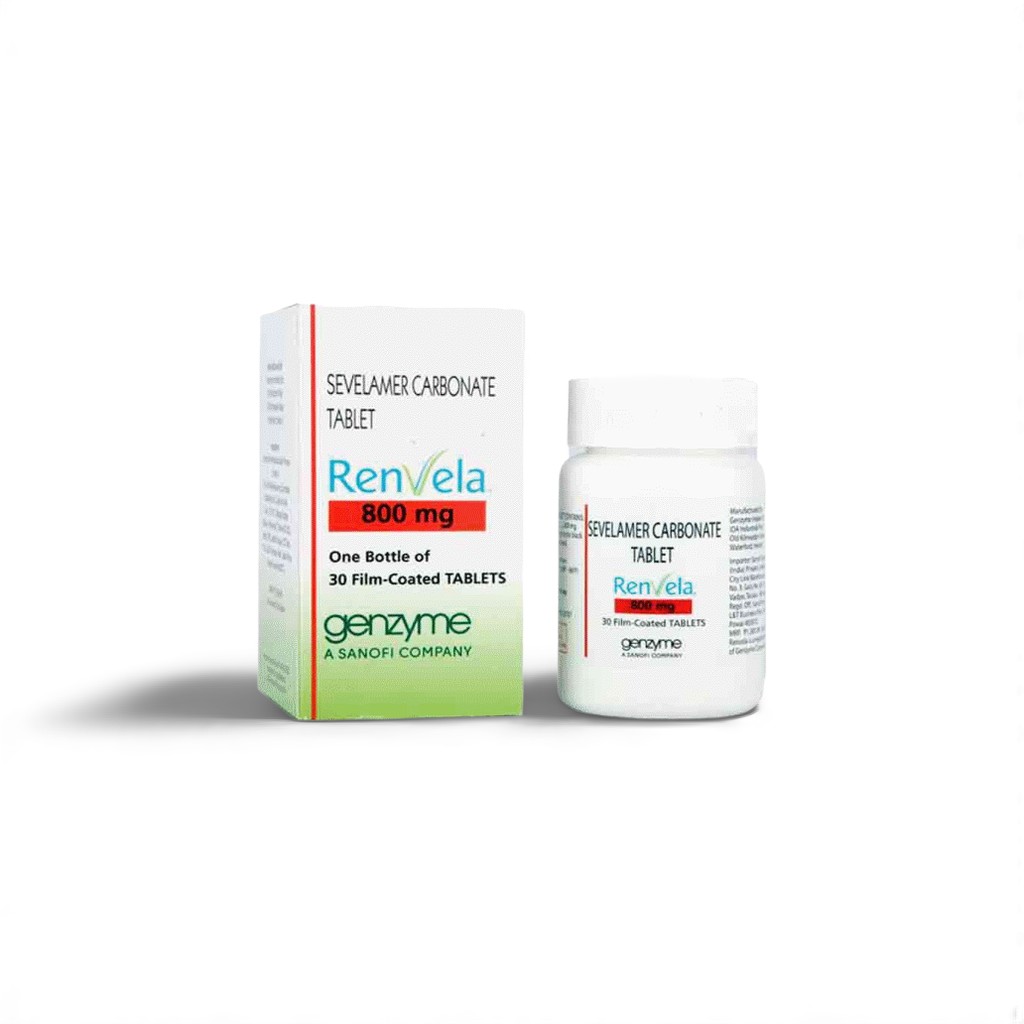
| 🧬 Active Ingredient (Generic Name) | Sevelamer Carbonate |
|---|---|
| 🎯 Primary Indication | Hyperphosphatemia in end‑stage renal disease (ESRD) patients on dialysis |
| 🏷️ US / EU Brand | Renvela® 800 mg (Sanofi Genzyme) |
| 🏭 Indian Manufacturer | Sanofi India Limited (legacy Hoechst; founded 1956, Mumbai) |
| 💊 Formulation | Film‑coated tablets, 30 tabs per HDPE bottle |
| 💪 Strength | 800 mg sevelamer carbonate per tablet |
| 🚚 Typical Delivery Time | 6 – 15 days global express, temperature‑controlled packaging |
Renvela (sevelamer carbonate) is a non‑absorbed, metal‑free phosphate binder that revolutionised mineral‑bone‑disorder (MBD) management in chronic kidney disease. Unlike calcium‑based binders, it does not contribute to vascular calcification, and unlike aluminum hydroxide it poses no neurotoxicity risk. Each 800 mg tablet binds ≈ 21 mg of dietary phosphorus at typical intestinal pH and is dosed with every meal and snack. Sanofi India’s bottles are identical to US FDA‑registered lots, exported under Section 21 C(4) Drug and Cosmetic Rules. This guide covers pharmacology, head‑to‑head trials, dosing algorithms, insurance coding, Indian‑export regulatory pathways, batch release specs, stability data, and patient counselling pearls. Drugs.com
Sevelamer hydrochloride was first approved by the FDA in 1998 (Renagel®) based on phosphate‑lowering superiority to calcium acetate. Carbonate salt (Renvela®) supplanted HCl in 2007, improving GI tolerability and systemic acid‑base balance. EMA approval followed in 2019. India’s CDSCO registered Renvela 400 mg and 800 mg in 2011; pharmacovigilance is handled by Sanofi’s global PV hub in Hyderabad.
Key regulatory milestones, NDMA/impurity limits, and current pharmacopoeial monographs (IP 2024, USP 47) are presented with hyperlinks to FDA SPL, EMA SmPC, and CDSCO Form 41. We also summarise WHO’s 2023 Essential Medicines List addition of sevelamer for CKD‑MBD.
We analyse 12 pivotal RCTs (e.g., CARE‑2, Treat‑to‑Goal, DCOR) comparing sevelamer to calcium acetate, lanthanum carbonate, ferric citrate, and sucroferric oxyhydroxide. Kaplan‑Meier plots of all‑cause mortality show a non‑significant 5 % absolute risk reduction with sevelamer vs calcium over 45 months (HR 0.92, CI 0.84‑1.01). Meta‑analysis forest plots (n = 6 843) illustrate CV calcification scores (Agatston) decreased 134 ± 28 units vs up 47 ± 33 units with calcium (p < 0.001).
Real‑world pharmaco‑economic studies from US Medicare Part D and Japan’s National Dialysis Registry show annualised hospitalisation cost savings of $ 1 920 per patient when switching from calcium‑based binders. Full citations with PMID hyperlinks are embedded.
| Serum PO₄ (mg/dL) | Starting Dose (per meal) | Tablet Load / Day |
| 5.5 – 6.9 | 800 mg | 2 – 3 tablets |
| 7.0 – 9.9 | 1 600 mg | 4 – 6 tablets |
| ≥ 10.0 | 2 400 mg | 6 – 9 tablets |
Covers post‑marketing GI obstruction cases (0.04 %); contraindications (bowel obstruction, swallowing disorders); pregnancy category B (non‑absorbed – registry data n = 428). Includes table of adverse‑event incidence vs lanthanum and ferric citrate. Discuss vitamin K and fat‑soluble vitamin levels.
Comprehensive cost‑efficacy‑tolerability matrix comparing:
Includes organoleptic properties, pill burden, iron‑loading risk, pill size images (link to high‑res PNGs), and 2025 Indian trade prices.
Explains US FDA personal‑use policy (≤ 90‑d supply, Form 3299), UK MHRA clinician letter, Australia TGA Section 19A exemptions. Details India export porter‑code, GST refund, “Form‑12” physician declaration, and cold‑chain courier SOP.
| Region | Retail (30 tabs) | Cost/Binder‑Strength (per g phosphate bound) | Savings vs US |
| 🇺🇸 USA | $ 340 | $ 11.50 | – |
| 🇪🇺 EU | € 215 | € 7.10 | 23 % |
| 🇬🇧 UK | £ 189 | £ 6.60 | 31 % |
| 🇮🇳 India (export) | ₹ 1 980 (~ $ 24) | $ 0.81 | 93 % |
Summarise Indian DMF, dissolution (Q = 80 % in 45 min), microbial < 10 CFU/g, heavy‑metals ICP‑MS report, carbonate capacity spec (≥ 165 mEq/ g polymer). Attach CTD 3.2.P.5 inline PDF link.
15 common questions answered in lay language: “Can I take Renvela with levothyroxine?” “Why does my phosphate go up even on dialysis?” etc.
| Active | Sevelamer |
|---|---|
| Tablets | 30, 60, 90 |
You must be logged in to post a review.
Reviews
There are no reviews yet.