- Your cart is empty
- Continue Shopping


Price range: $30.00 through $80.00
✅ Active Ingredient Overview Table:
| 🔬 Active Ingredient (Generic Name): | Lidocaine Hydrochloride |
|---|---|
| 💊 Indication: | Local Anesthesia, Ventricular Arrhythmias (IV infusion) |
| 🇺🇸 US Brand: | Xylocaine |
| 🏭 Manufacturer: | German Remedies Pvt Ltd (Founded: 1977) |
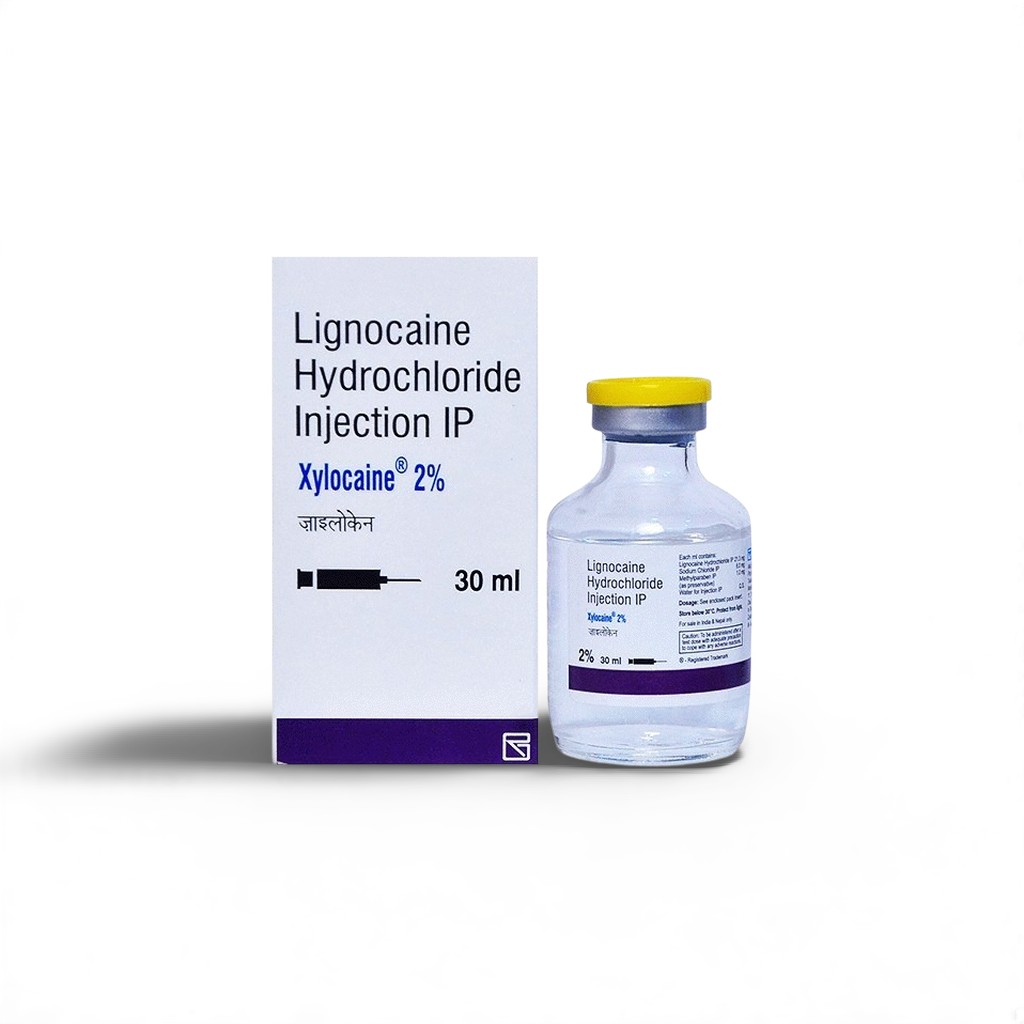
| 📦 Packaging: | 2% (20 mg/mL) in 30 mL Ampoule |
| 🧪 Strength: | 20 mg/mL (2%) |
| 🚚 Delivery Time: | 6–15 days |
Xylocaine 2% Injection contains Lidocaine Hydrochloride, an amide-type local anesthetic that blocks sodium channels in nerve membranes, preventing depolarization and conduction of nerve impulses. It provides rapid-onset anesthesia for procedures and is also used intravenously to treat acute ventricular arrhythmias.
For comprehensive prescribing, administration guidelines, and safety information, consult the FDA label for Xylocaine Injection, the Drugs.com monograph, the NHS Medicines A–Z entry, and the WHO Essential Medicines List.
| Attribute | Detail |
|---|---|
| Chemical Formula | C14H22N2O • HCl |
| Molecular Weight | 270.80 g/mol (salt) |
| Onset of Action | 2–5 minutes (infiltration); 1–2 minutes (IV) |
| Duration of Action | 30–60 minutes (infiltration) |
| Metabolism | Hepatic (CYP1A2, CYP3A4) |
| Half-Life | 1.5–2 hours (IV); prolonged in elderly/renal impairment |
Lidocaine inhibits voltage-gated sodium channels, reducing nerve impulse transmission and providing sensory and motor blockade.
| Use | Dose & Administration |
|---|---|
| Local/Regional Anesthesia | 5–10 mL of 2% solution for infiltration or nerve block; max 300 mg per procedure (≤15 mL) |
| Ventricular Arrhythmias (IV) | 1–1.5 mg/kg IV bolus over 2–3 min; may repeat 0.5–0.75 mg/kg every 5–10 min; infusion 1–4 mg/min |
Always aspirate before injection to avoid intravascular administration during regional anesthesia. Adjust dose in hepatic dysfunction.
Common:
Serious:
Contraindicated in patients with hypersensitivity to amide anesthetics. Monitor ECG, BP, and respiratory status during IV administration.
Store at 20–25°C. Protect from light. Use aseptic technique. Discard unused portion of opened ampoule.
Importing from India may provide cost advantages; verify regulatory requirements and possess valid prescription.
“Xylocaine 2% injection remains a mainstay for rapid-onset local anesthesia and acute ventricular arrhythmia management. Its safety profile is excellent when doses are appropriately calculated.”
| Active | Lidocaine |
|---|---|
| injection/s | 3, 6, 9 |