- Your cart is empty
- Continue Shopping


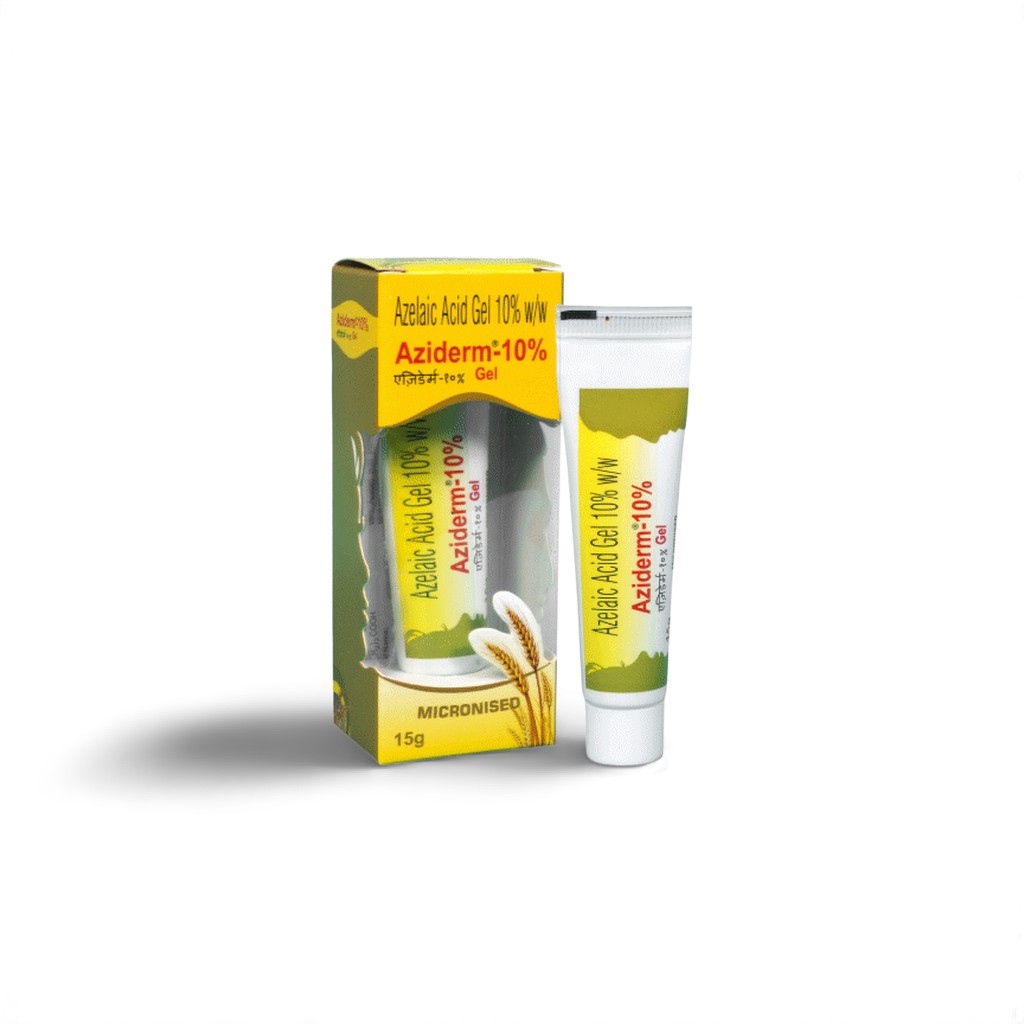
Price range: $7.00 through $35.00
✅ Active Ingredient Overview Table:
| 🔬 Active Ingredient (Generic Name): | Azelaic Acid |
|---|---|
| 💊 Indication: | Acne Vulgaris (Comedonal & Inflammatory Lesions), Rosacea |
| 🇺🇸 US Brand Equivalent: | Finacea |
| 🏭 Manufacturer: | Micro Labs Limited (Founded: 1973) |
| 📦 Packaging: | 15 g Tube |
| 🧪 Strength: | 10% w/w |
| 🚚 Delivery Time: | 6–15 days |
Aziderm 10% Gel offers a dual-action topical therapy for acne and rosacea. Azelaic acid is a naturally occurring dicarboxylic acid that addresses hyperkeratinization and bacterial proliferation in acne, while also exhibiting anti-inflammatory and antioxidant properties beneficial in rosacea.
In acne, follicular hyperkeratinization leads to comedone formation; Propionibacterium acnes then propagates inflammation. Azelaic acid normalizes keratinocyte differentiation, reducing comedones, and inhibits P. acnes growth. In rosacea, azelaic acid reduces inflammatory papules and pustules and diminishes erythema. Clinical trials demonstrate up to a 60% reduction in lesion counts at 12 weeks with twice-daily use.
Aziderm’s gel base enhances percutaneous absorption while minimizing irritation. Patients often experience initial mild tingling that subsides within days, after which skin texture and clarity improve. For many, this therapy provides a well-tolerated alternative to harsher topical retinoids or antibiotics.
| Attribute | Detail |
|---|---|
| Chemical Formula | C9H16O4 |
| Molecular Weight | 188.22 g/mol |
| Mode of Action | Inhibits keratinocyte proliferation, normalizes differentiation; bacteriostatic against P. acnes; anti-inflammatory |
| Local Activity | Reduces reactive oxygen species; decreases inflammatory cytokines |
| Condition | Application |
|---|---|
| Acne Vulgaris | • Cleanse and dry affected areas. |
| • Apply a pea-sized amount twice daily (morning and evening). | |
| • Continue for at least 12 weeks for optimal results. | |
| Rosacea | • Apply a thin layer to affected areas twice daily. |
| • Monitor for erythema; treatment may continue for up to 16 weeks. |
Avoid contact with eyes, lips, and mucous membranes. Use non-comedogenic moisturizer and daily SPF 30+ sunscreen due to increased photosensitivity.
Common:
Serious (rare):
Advise patients to start with once-daily application if sensitivity is high and then increase to twice daily. Discontinue if severe irritation or allergic reaction occurs.
Store Aziderm 10% Gel at 20–25°C in its original tube. Protect from light and heat. Keep out of reach of children.
Micro Labs’ Aziderm Gel provides an affordable, effective option. Ensure compliance with local prescribing guidelines.
“Azelaic acid’s multifaceted action—normalizing keratinization, antibacterial, and anti-inflammatory—makes Aziderm Gel an excellent choice for patients seeking an effective, well-tolerated acne or rosacea therapy.”
| Active | Azelaic Acid |
|---|---|
| Tube's | 1, 3, 6 |