
- Your cart is empty
- Continue Shopping
Health Benefits of Quinoa — New Scientific Review
-
Dr. Tina Sugandh
- Posted on
🌾 Nutrition Science • Superfoods • Preventive Health
Quinoa Health Benefits — New Research Confirms Nutritional Powerhouse
📋 University of Agriculture Faisalabad • Sultan Qaboos University • 6 min read
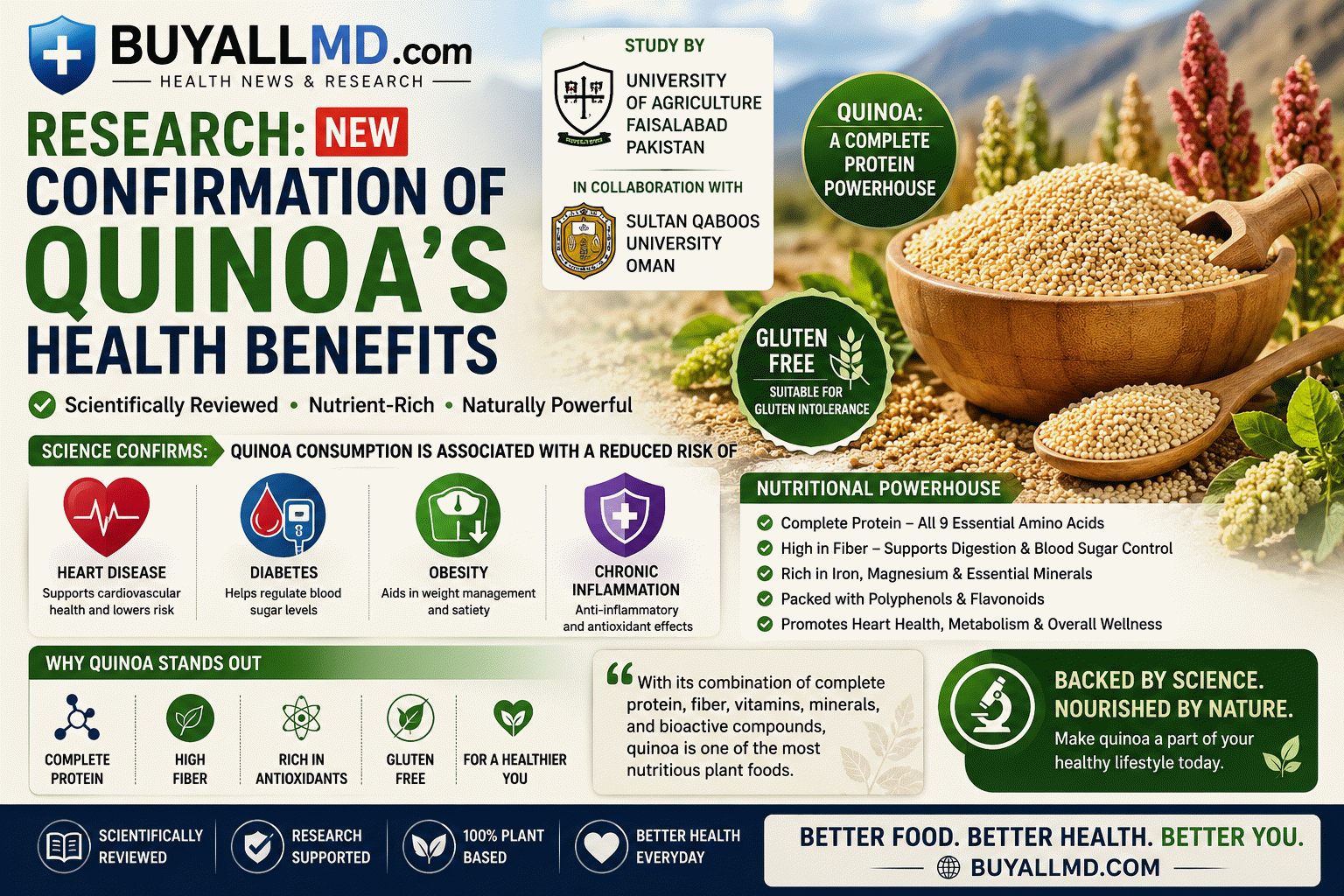
🌾 New research confirms quinoa’s benefits for reducing risk of diabetes, cardiovascular disease, obesity, and chronic inflammation.
🌾 What Is Quinoa and Why Is It Special?
Scientists from the University of Agriculture in Faisalabad, Pakistan, in collaboration with researchers from Sultan Qaboos University in Oman, have published a comprehensive review confirming the health benefits of quinoa.
The findings show that regular consumption of quinoa is associated with a reduced risk of diabetes, cardiovascular disease, obesity, and chronic inflammation.
🩸
Reduces Diabetes Risk Slow glucose absorption
❤️
Heart Health Supports cardiovascular function
⚖️
Weight Management Supports healthy weight control
🛡️
Reduces Inflammation Anti-inflammatory properties
💡 Key Finding: Quinoa is one of the most nutritious plant-based foods due to its complete protein profile, rich fiber content, and abundance of bioactive compounds.
🧬 Nutritional Profile — What Makes Quinoa a Superfood?
🧬
Complete Protein All 9 essential amino acids
🌾
High Fiber Supports digestion and glucose control
🩸
Rich in Minerals Iron, magnesium, zinc
🛡️
Polyphenols & Flavonoids Antioxidant and anti-inflammatory
🚫
Gluten-Free Safe for celiac disease
📚 References: PubMed — Quinoa Research • WHO — Nutrition Guidelines • FAO — International Year of Quinoa
✅ Key Health Benefits of Quinoa
🩸
Blood Sugar Control
Fiber slows glucose absorption, helping to reduce the risk of type 2 diabetes and maintain stable blood sugar levels.
❤️
Heart Health
Rich in magnesium and fiber, quinoa supports cardiovascular function and may reduce the risk of heart disease.
⚖️
Weight Management
High protein and fiber content promote satiety and healthy weight control, making it valuable for obesity prevention.
🛡️
Anti-Inflammatory
Flavonoids and polyphenols provide potent antioxidant and anti-inflammatory effects, reducing chronic inflammation.
📊 Quinoa vs Other Grains — Nutritional Comparison
| Nutrient (per 100g cooked) | 🌾 Quinoa | 🍚 White Rice | 🌾 Brown Rice | 🌾 Wheat |
|---|---|---|---|---|
| Protein | 4.4g | 2.7g | 2.6g | 3.2g |
| Fiber | 2.8g | 0.4g | 1.8g | 2.0g |
| Magnesium | 64mg | 12mg | 39mg | 25mg |
| Iron | 1.5mg | 0.2mg | 0.5mg | 0.9mg |
| Gluten-Free | ✅ Yes | ✅ Yes | ✅ Yes | ❌ No |
📋 Research Context
- Lead Institution: University of Agriculture, Faisalabad, Pakistan
- Collaborating Institution: Sultan Qaboos University, Oman
- Publication Type: Comprehensive review of quinoa health benefits
- Key Findings: Strong association with reduced risk of diabetes, cardiovascular disease, obesity, and chronic inflammation
- Nutritional Significance: Quinoa is a complete protein source and rich in fiber, minerals, and bioactive compounds
📚 References: PubMed — Quinoa and Health • FAO — Quinoa Nutritional Value • Harvard — Superfoods Guide
🍽️ How to Incorporate Quinoa Into Your Diet
🥗
Salads Add cooked quinoa to salads for extra protein and texture
🍚
Rice Replacement Use quinoa instead of rice in stir-fries and side dishes
🍲
Soups & Stews Add quinoa to soups for a nutritious boost
🥣
Breakfast Bowls Make quinoa porridge with fruit and nuts
📌 Tip: Rinse quinoa thoroughly before cooking to remove natural saponins, which can cause a bitter taste.
❓ Frequently Asked Questions
Is quinoa a complete protein?
Yes! Quinoa contains all nine essential amino acids, making it one of the few plant-based complete protein sources.
Is quinoa gluten-free?
Yes, quinoa is naturally gluten-free and safe for people with celiac disease or gluten sensitivity.
What are the main health benefits of quinoa?
Research shows quinoa helps reduce the risk of diabetes, heart disease, obesity, and chronic inflammation due to its high fiber, protein, and antioxidant content.
How does quinoa compare to other grains?
Quinoa has higher protein, fiber, and mineral content than most other grains, making it a superior nutritional choice.
Where does quinoa come from?
Quinoa is a pseudocereal native to the Andean region of South America, where it has been cultivated for thousands of years.
⚠️ Disclaimer
This content is for informational and educational purposes only. The research discussed is based on scientific review and does not constitute medical advice. Always consult a qualified healthcare professional or registered dietitian before making significant dietary changes.
© 2026 BuyAllMD.com — Evidence-Based Nutrition Science
