
- Your cart is empty
- Continue Shopping
Chronic Sleep Deprivation Leads
-
Dr. Tina Sugandh
- Posted on
🧬 Sleep Science • Metabolism • Weight Gain • Public Health
Study: Even Mild Chronic Sleep Deprivation Leads to Weight Gain
📋 Columbia University • Sleep Restriction • Insulin Resistance • Inflammation • 6 min read
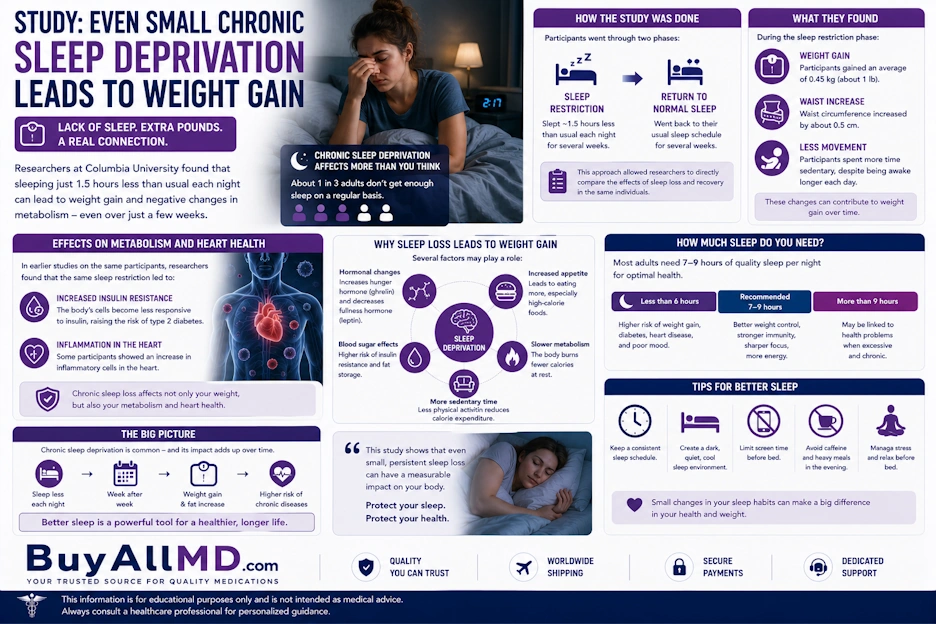
🧬 Columbia University researchers found that sleeping just 1.5 hours less per night leads to weight gain, increased waist circumference, and reduced physical activity.
🧬 The Discovery — Sleep Loss and Weight Gain
In the United States, scientists from Columbia University studied how chronic sleep deprivation affects body weight and metabolism. Over several weeks, participants slept approximately 1.5 hours less than their usual amount, then returned to their normal sleep routine — allowing researchers to directly compare the results.
The study included healthy adults who were monitored in a controlled environment. The findings add to a growing body of evidence linking insufficient sleep to metabolic dysfunction and weight gain.
⚖️
+0.45 kg
Average weight gain
📏
+0.5 cm
Waist circumference increase
🛋️
Less Activity
More sedentary time
💡 Key Finding: During the sleep restriction period, participants gained an average of 0.45 kg and their waist circumference increased by approximately 0.5 cm — despite only a modest reduction in sleep.
🔬 Why Sleep Loss Leads to Weight Gain
The mechanisms linking sleep deprivation to weight gain are complex and involve multiple physiological pathways:
🍔
Increased Appetite
Sleep deprivation alters hunger hormones — increasing ghrelin (hunger signal) and decreasing leptin (fullness signal).
🩸
Insulin Resistance
Earlier work in the same participants found increased insulin resistance — a precursor to type 2 diabetes.
🔥
Inflammation
Some participants showed influx of inflammatory cells into the heart — indicating systemic inflammation.
🛋️
Reduced Activity
Despite longer wakefulness, participants spent more time sedentary, further promoting weight gain.
📌 Key Insight: Sleep loss creates a perfect storm for weight gain — you eat more, your metabolism slows, and you move less. Even modest reductions in sleep can have significant cumulative effects over time.
🧬 Hormonal Changes — Ghrelin, Leptin, and Cortisol
Sleep deprivation triggers a cascade of hormonal changes that promote weight gain:
📈
Ghrelin ↑
The “hunger hormone” increases, making you feel more hungry and crave high-calorie foods.
📉
Leptin ↓
The “fullness hormone” decreases, making it harder to feel satisfied after eating.
📈
Cortisol ↑
The stress hormone rises, promoting abdominal fat storage and increasing appetite.
📊 The Cumulative Effect — Why This Matters for Public Health
The authors note that this pattern of chronic sleep deprivation is characteristic of approximately one-third of adults. Over time, the cumulative effect of even modest sleep loss can contribute to:
⚖️
Obesity
Chronic sleep loss is a well-established risk factor for obesity across all age groups.
🩸
Type 2 Diabetes
Insulin resistance from sleep loss increases the risk of developing diabetes.
❤️
Cardiovascular Disease
Inflammation and metabolic changes increase cardiovascular risk over time.
⚠️ Public Health Concern: With one-third of adults chronically sleep-deprived, this represents a significant public health burden that contributes to the global obesity epidemic.
💊 Support Your Sleep and Metabolic Health
If you’re struggling to get enough quality sleep, there are evidence-based sleep aids that can help support healthy sleep patterns. Explore a range of products designed to improve sleep quality and support overall metabolic health:
😴
Quality Sleep Support
Sleep aids can help you fall asleep faster and stay asleep longer, reducing the metabolic impact of sleep loss.
🛡️
Metabolic Health
Good sleep supports healthy metabolism, hormone balance, and weight management.
🌙 Need help getting better sleep? Browse our selection of sleep aids:
🛒 View Sleep Aid Products
📝 How to Protect Your Health from Sleep Deprivation
Based on the research, here are some practical strategies to prevent weight gain from chronic sleep loss:
- Aim for 7–9 hours of sleep — this is the recommended amount for most adults.
- Maintain a consistent sleep schedule — go to bed and wake up at the same time every day.
- Create a sleep-friendly environment — keep your bedroom dark, cool, and quiet.
- Limit screen time before bed — blue light from devices disrupts melatonin production.
- Avoid caffeine and alcohol close to bedtime — both interfere with sleep quality.
- Get regular physical activity — but avoid intense exercise right before bed.
❓ Frequently Asked Questions
How much weight can you gain from sleep deprivation?
In the Columbia University study, participants gained an average of 0.45 kg over several weeks with just 1.5 hours less sleep per night. The effects can be larger and more rapid in individuals who are already overweight or insulin-resistant.
Does sleep deprivation cause insulin resistance?
Yes. Earlier studies in the same participants found that chronic sleep loss leads to increased insulin resistance — a key factor in the development of type 2 diabetes.
Does sleep deprivation increase inflammation?
Yes. Some participants in the study showed influx of inflammatory cells into the heart after sleep restriction, indicating that even modest sleep loss can trigger systemic inflammation.
What percentage of adults are chronically sleep-deprived?
Approximately one-third of adults regularly get less sleep than recommended, putting them at risk for the cumulative metabolic effects of chronic sleep loss.
Can sleep aids help with weight management?
By improving sleep quality, sleep aids can help restore normal hormone balance (ghrelin, leptin, cortisol) and support healthy metabolism. However, they should be used as part of a comprehensive approach that includes good sleep hygiene and healthy lifestyle habits. Explore sleep aid options.
📚 References & Resources
- PubMed — Sleep Deprivation and Metabolism
- Columbia University — Research
- CDC — Sleep Hygiene Tips
- WHO — Obesity Fact Sheet
- Sleep Foundation — Sleep Health
⚠️ Medical Disclaimer
This content is for informational and educational purposes only. The research findings discussed are based on scientific studies and do not constitute medical advice. Always consult a qualified healthcare professional before starting any new supplement, medication, or health regimen, especially if you have existing health conditions or are taking medications.
© 2026 BuyAllMD.com — Evidence-Based Sleep Science & Public Health
