
- Your cart is empty
- Continue Shopping
Why Statins, Beta-Blockers, and Antidepressants Deplete CoQ10
-
Dr. Tina Sugandh
- Posted on
 Nutrition Science • Mitochondrial Health • Energy Production • Antioxidant
Coenzyme Q10: Why Your Body Needs It and Where to Find It
 University of Castilla-La Mancha • Blood Sugar Control • Fatigue • Statins • 6 min read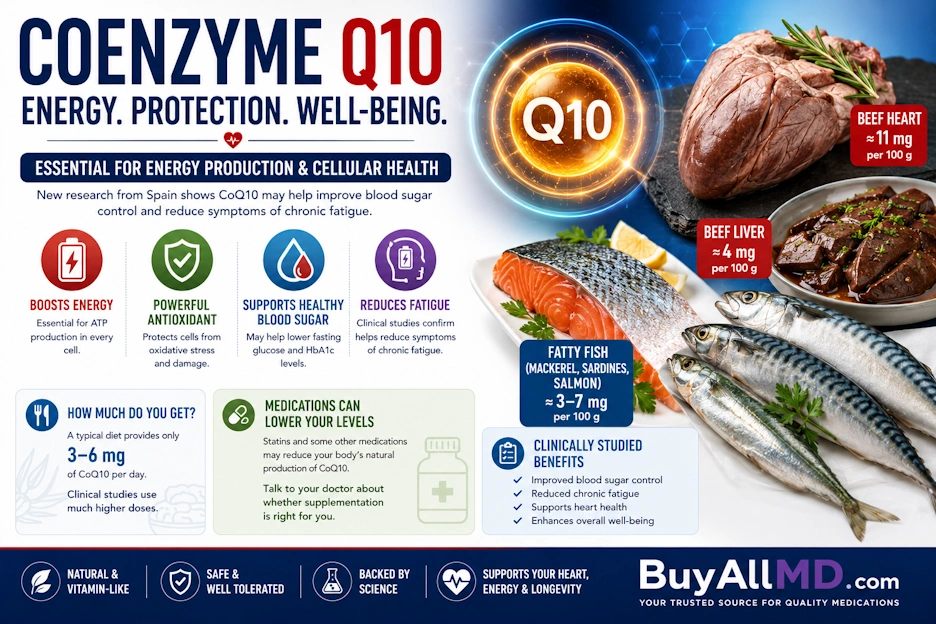
Coenzyme Q10 is essential for cellular energy production and antioxidant protection. Research shows it supports blood sugar control and reduces chronic fatigue. The Discovery — CoQ10 and Metabolic Health
In Spain, scientists from the University of Castilla-La Mancha analyzed the results of dozens of studies on the effects of coenzyme Q10 (CoQ10) on the body. They demonstrated that CoQ10 supplements help improve blood sugar control — reducing fasting glucose and glycated hemoglobin (HbA1c) levels.
A separate meta-analysis also confirmed that CoQ10 is effective and safe in reducing symptoms of chronic fatigue syndrome — a condition affecting millions worldwide.

Blood Sugar Control
Reduces fasting glucose and HbA1c

Energy Production
Essential for cellular energy (ATP)

Antioxidant
Protects cells from oxidative damage
 Key Finding: CoQ10 supplementation significantly improved glycemic control and reduced fatigue symptoms — making it a valuable tool for metabolic and energy health.
 What Is Coenzyme Q10 and Why Does Your Body Need It?
Coenzyme Q10 is a fat-soluble, vitamin-like compound that is essential for life. It serves two critical functions in the body:
Energy Production
CoQ10 is a critical component of the mitochondrial electron transport chain — the process that generates ATP, the energy currency of every cell in your body.
Antioxidant Protection
CoQ10 is a powerful lipid-soluble antioxidant that protects cell membranes and mitochondria from oxidative damage caused by free radicals.
 Key Insight: Organs with the highest energy demands — such as the heart, brain, liver, and kidneys — have the highest concentrations of CoQ10.
 Food Sources — Where to Find Coenzyme Q10
CoQ10 is produced naturally by the body, but it also comes from food. The richest dietary sources include:
| Food Source | CoQ10 Content (per 100g) | Notes |
|---|---|---|
Beef Heart  |
~11 mg | Highest natural source of CoQ10 |
| Beef Liver |
~4 mg | Rich in nutrients, but consume in moderation |
Mackerel  |
~7 mg | Also rich in omega-3 fatty acids |
| Sardines |
~6 mg | Affordable and nutrient-dense |
| Salmon |
~3 mg | Popular source of CoQ10 and healthy fats |
Soybean Oil  |
~1.5 mg | Plant-based source of CoQ10 |
Dietary Gap: A typical diet provides only about 3–6 mg of CoQ10 per day — significantly less than the doses used in clinical research (often 100–300 mg daily).
 Medications That Deplete Coenzyme Q10
Several commonly prescribed medications can significantly reduce CoQ10 levels in the body. If you take any of these, supplementation may be particularly important:
Statins (Cholesterol)
Atorvastatin (Lipitor), Rosuvastatin (Crestor), and Simvastatin directly lower blood and muscle CoQ10 levels. Learn more →
Beta-Blockers (Blood Pressure)
Metoprolol (Lopressor) and Propranolol have been shown to inhibit CoQ10-dependent enzymes. Learn more →

Tricyclic Antidepressants
Amitriptyline and Doxepin can drastically lower cellular CoQ10 concentrations. Learn more →
Sulfonylureas (Diabetes)
Glyburide and Tolazamide suppress vital mitochondrial enzymes, reducing CoQ10 production. Learn more →
 Important Note: If you are taking any of these medications, consult your healthcare provider before starting CoQ10 supplementation. They can help determine the right dosage and monitor your health.
Support Your Energy and Metabolic Health
If your diet isn’t providing enough CoQ10 — or if you’re taking medications that deplete it — supplementation can help bridge the gap. Explore our range of high-quality CoQ10 supplements designed to support:
Cellular Energy
Support mitochondrial function and natural energy production.
Heart Health
CoQ10 is especially concentrated in the heart and supports cardiovascular function.
Cognitive Health
Protect brain cells from oxidative stress and support mental clarity.
 Frequently Asked Questions
What is coenzyme Q10 and why do we need it?
Coenzyme Q10 is a fat-soluble compound that is essential for cellular energy production (ATP) and acts as a powerful antioxidant, protecting cells from oxidative damage.
What medications deplete CoQ10 levels?
Statins (atorvastatin, rosuvastatin, simvastatin), beta-blockers (metoprolol, propranolol), tricyclic antidepressants (amitriptyline, doxepin), and sulfonylureas (glyburide, tolazamide) can all significantly reduce CoQ10 levels.
What foods are highest in CoQ10?
Beef heart is the richest source (~11 mg per 100g). Other sources include beef liver, mackerel, sardines, and salmon. Plant-based sources include soybean oil and nuts, but in smaller amounts.
Can CoQ10 help with blood sugar control?
Yes. A meta-analysis from the University of Castilla-La Mancha found that CoQ10 supplementation significantly reduces fasting glucose and HbA1c levels, making it beneficial for metabolic health.
How much CoQ10 should I take?
Clinical studies typically use doses of 100–300 mg per day. A typical diet provides only 3–6 mg per day, so supplementation is often needed to reach therapeutic levels. Always consult your healthcare provider.
 References & Resources
- PubMed — CoQ10 and Blood Sugar Research
- PubMed — CoQ10 and Chronic Fatigue
- PubMed — Statins and CoQ10 Depletion
- University of Castilla-La Mancha — Research
- NIH — Coenzyme Q10 Fact Sheet
Medical Disclaimer
This content is for informational and educational purposes only. The research findings discussed are based on scientific studies and do not constitute medical advice. Always consult a qualified healthcare professional before starting any new supplement, medication, or health regimen — especially if you have existing health conditions or are taking prescription medications such as statins, beta-blockers, antidepressants, or diabetes medications.
© 2026 AusPharmX.com — Evidence-Based Nutrition & Health Science
