
- Your cart is empty
- Continue Shopping
Turmeric, Cinnamon & Red Pepper
-
Dr. Tina Sugandh
- Posted on
🌿 Nutrition Science • Metabolism • Gut Microbiome • Brain Health
Turmeric, Pepper, and Cinnamon — Scientists Explain the Mechanisms Behind Their Health Benefits
📋 UCLA Center for Human Nutrition • Polyphenols • Metabolism • Inflammation • 7 min read
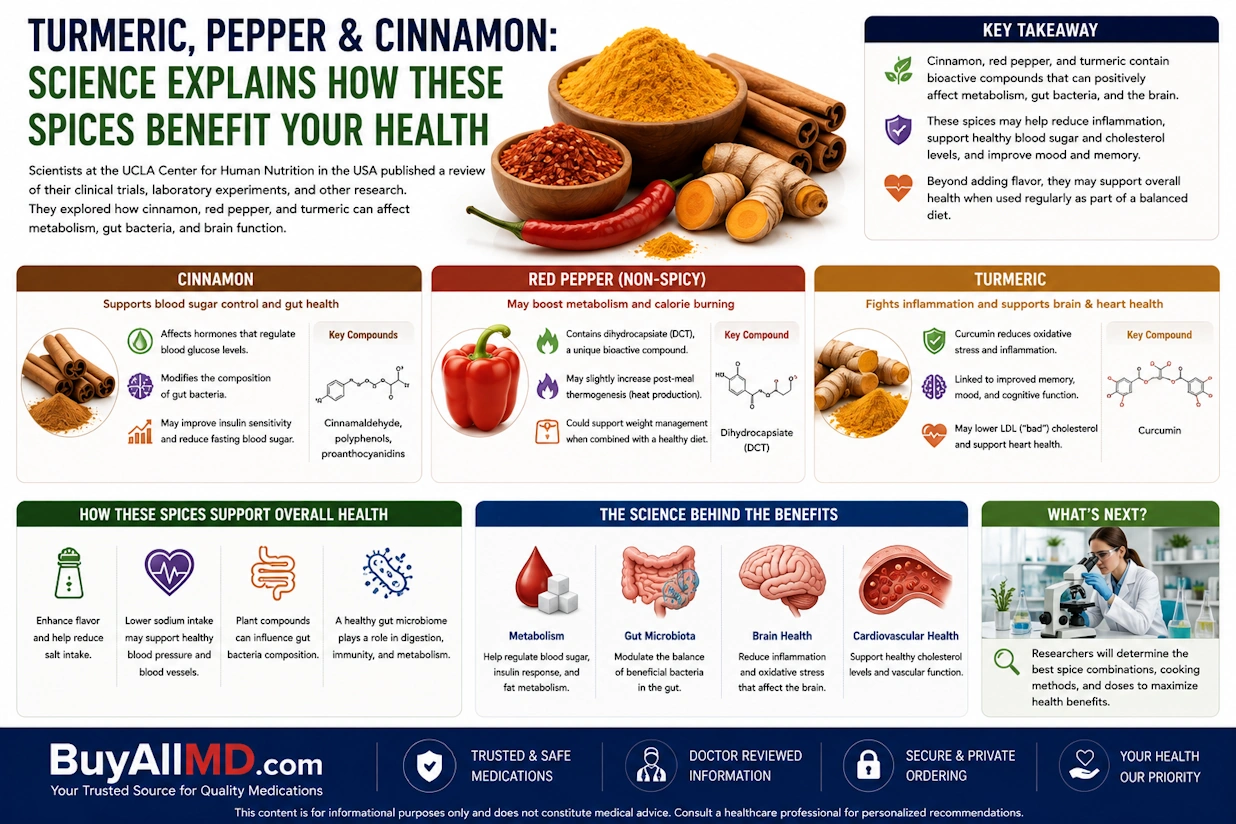
🌿 A comprehensive review from the UCLA Center for Human Nutrition reveals how common kitchen spices — turmeric, cinnamon, and red pepper — influence metabolism, gut bacteria, and brain function.
🌿 The Discovery — Spices as More Than Flavor
In the United States, scientists from the UCLA Center for Human Nutrition have published a comprehensive review of their own clinical trials, laboratory experiments, and other scientific studies. They examined how cinnamon, red pepper, and turmeric may influence metabolism, gut bacteria, and brain function [citation:1][citation:6].
The review, published in Nutrition Reviews, collated the results of eight human trials and twelve in vitro experiments conducted at UCLA between 2010 and 2024, examining the effects of spices and herbs on human health [citation:1][citation:6].
🌿
Cinnamon
Blood sugar & gut microbiome
🌶️
Red Pepper
Thermogenesis & fat metabolism
🧠
Turmeric
Anti-inflammatory & brain health
💡 Key Insight: Spices do not work through just one mechanism — they appear to influence multiple systems simultaneously, from gut bacteria and inflammation to appetite regulation and blood sugar control [citation:7].
🍂 Cinnamon — Blood Sugar, Hormones, and Gut Microbiome
Two clinical trials at UCLA found that cinnamon supplementation reduced postprandial insulin and glucagon levels in both normal-weight and overweight/obese participants [citation:1]. Cinnamon intake was also associated with:
🩸
Lower Glucose Levels
Cinnamon lowered average glucose concentrations during 24-hour continuous glucose monitoring [citation:2].
🦠
Gut Microbiome Changes
Notable changes in gut microbiome composition were observed, including reduced Terrisporobacter and Dialister [citation:2].
📊
Lower Triglycerides
Cinnamon decreased postprandial triglyceride concentrations — an effect associated with reduced cardiovascular risk [citation:2].
📌 Key Detail: The active compound cinnamaldehyde is thought to play a pivotal role in cinnamon’s protective effects, including anti-inflammatory, antioxidant, and neuroprotective properties [citation:1][citation:2].
🌶️ Red Pepper — Thermogenesis and Fat Metabolism
Capsaicin in chili peppers stimulates thermogenesis but can cause gastrointestinal side effects at effective doses. However, non-pungent CH-19 sweet red peppers contain capsinoids such as dihydrocapsiate (DCT), which may provide similar metabolic benefits without the side effects [citation:1].
🔥
Increased Thermogenesis
DCT activates TRPV1 receptors in the gut, triggering the sympathetic nervous system and potentially increasing thermogenesis and fat metabolism [citation:1].
⚡
Post-Meal Energy Expenditure
A 2010 UCLA study found that only the group receiving 9 mg DCT showed a significant increase in post-meal energy expenditure [citation:1].
🔄
Mixed Human Results
More recent studies found that DCT did not significantly affect energy expenditure or fat oxidation during exercise or at rest, though a small thermic effect was noted [citation:1].
🧠 Turmeric — Brain Health, Inflammation, and Cholesterol
Curcumin, the active compound in turmeric, has demonstrated remarkable effects across multiple health domains:
🧠
Memory & Mood
A UCLA study found that daily supplementation with a bioavailable form of curcumin over 18 months improved memory, attention, and mood in older adults [citation:1][citation:15].
🛡️
Anti-Inflammatory & Antioxidant
Curcumin acts as a potent antioxidant, neutralizing free radicals and boosting the body’s antioxidant enzymes while inhibiting key inflammatory pathways [citation:1].
❤️
Heart Health
Curcumin improves cholesterol profiles by increasing HDL and lowering LDL levels in patients with metabolic syndrome [citation:1][citation:4].
⚠️ Important Caveat: Curcumin is poorly absorbed on its own. Pairing turmeric with black pepper (which contains piperine) and some fat dramatically boosts bioavailability [citation:11].
🔬 Beyond Flavor — A Flavorful Path to Less Salt
Spices help make food more flavorful and can reduce salt intake without compromising taste [citation:14]. This may support normal blood pressure and vascular health [citation:5]. The polyphenols in spices also:
🦠
Feed Beneficial Gut Bacteria
Spice polyphenols promote the growth of lactobacilli and bifidobacteria while inhibiting certain potentially pathogenic bacteria [citation:1].
🛡️
Reduce Oxidative Stress
Incorporating polyphenol-rich spices into meat before cooking significantly reduces markers of lipid peroxidation [citation:1].
🔄
Improve Endothelial Function
Spice polyphenols help decrease markers of oxidative stress and improve blood-vessel function [citation:1].
📊 How Spices Work — Key Mechanisms
| Spice | Key Compound | Primary Effect | Mechanism |
|---|---|---|---|
| Cinnamon | Cinnamaldehyde | Blood sugar regulation | Modulates inflammatory gene expression, insulin sensitivity [citation:1] |
| Red Pepper | Capsaicin / Dihydrocapsiate | Thermogenesis | Activates TRPV1 receptors, sympathetic nervous system [citation:1] |
| Turmeric | Curcumin | Anti-inflammatory / Brain health | Inhibits inflammatory pathways, reduces oxidative stress [citation:1][citation:4] |
💡 Practical Takeaways — How to Get the Most Benefit
🍽️
Use Spices to Reduce Salt
Herbs and spices can replace salt without compromising taste — supporting healthy blood pressure and vascular health [citation:5][citation:14].
🧑🍳
Combine for Synergy
Black pepper enhances curcumin absorption; healthy fats (olive oil) further improve bioavailability [citation:11].
🌿
Variety Matters
Different spices offer different benefits — a diverse spice rack supports multiple pathways: gut health, metabolism, and inflammation [citation:1].
📌 Important: Most of the impressive trials used spice doses far higher than any meal would provide, often via capsules. Spices are best seen as a flavorful bonus to a healthy diet, not a medicine cabinet [citation:11].
❓ Frequently Asked Questions
What did the UCLA spice review find?
The review found that cinnamon influences blood sugar and gut bacteria, red pepper may increase thermogenesis, and turmeric reduces inflammation and supports brain health. Spices also help reduce salt intake and support cardiovascular health [citation:1][citation:6].
How does cinnamon affect blood sugar?
Cinnamon lowers postprandial insulin and glucagon levels, reduces average glucose concentrations during continuous glucose monitoring, and changes gut microbiome composition — though effects can be modest and inconsistent [citation:1][citation:2].
Can turmeric really improve memory?
A UCLA study found that daily bioavailable curcumin supplementation over 18 months improved memory, attention, and mood in older adults. However, most food sources contain far lower amounts than used in clinical trials [citation:1][citation:15].
Why does black pepper enhance turmeric’s effects?
Piperine in black pepper dramatically boosts curcumin absorption by inhibiting its rapid metabolism. Combining turmeric with black pepper and some fat is the most effective way to improve bioavailability [citation:11].
Can spices replace salt in food?
Yes. Herbs and spices can reduce salt intake without compromising taste, supporting healthy blood pressure and cardiovascular health. This is particularly valuable for older adults who may have a high salty taste threshold [citation:5][citation:14].
📚 References & Resources
- Nutrition Reviews — Spices Beyond Antioxidants
- News-Medical — Spice Health Benefits
- MindBodyGreen — Spices and Metabolic Health
- Futura Sciences — Spices and Health
- WHO — Healthy Diet Fact Sheet
⚠️ Medical Disclaimer
This content is for informational and educational purposes only. The research findings discussed are based on scientific studies and do not constitute medical advice. While spices can be a healthy addition to a balanced diet, they are not a substitute for medical treatment. Always consult a qualified healthcare professional for personalized health guidance, especially if you have concerns about blood sugar, blood pressure, or any other medical condition. High-dose spice supplements carry real risks and may interact with medications such as blood thinners.
© 2026 BuyAllMD.com — Evidence-Based Nutrition & Public Health News
