
- Your cart is empty
- Continue Shopping
Bisphenols in Receipts: Health Risks of Thermal Paper
-
Dr. Tina Sugandh
- Posted on
🧪 Environmental Health • Endocrine Disruptors • Public Health
Study: Cash Register Receipts May Disrupt Hormonal System Function
📋 Hanyang University • Bisphenols • Thermal Paper • Occupational Exposure • 6 min read
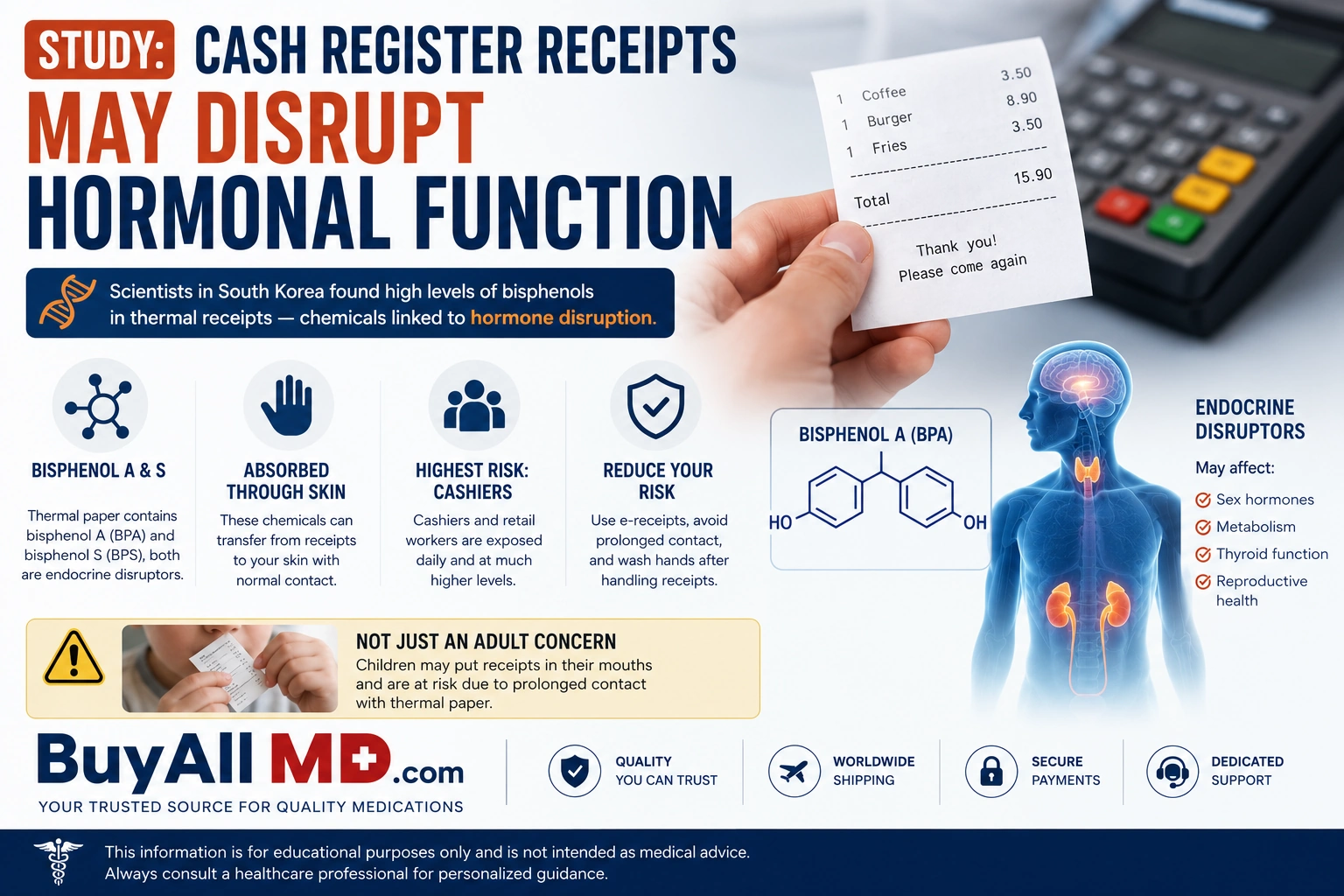
🧫 Hanyang University research shows thermal paper receipts contain high concentrations of bisphenols that can transfer to skin and disrupt hormonal function.
🧪 What the Study Found
Scientists from Hanyang University in South Korea have investigated the presence of bisphenols in cash register receipts and other types of paper. The results revealed that thermal paper contains high concentrations of Bisphenol A (BPA) and its analogues — chemicals that can transfer from the receipt surface to the skin through ordinary contact.
BPA and BPS were detected in 99% and 100% of samples, respectively, with concentrations ranging from 1.98 to 1061 μg per gram of paper.
🧪
BPA Detected 99% of samples
🧪
BPS Detected 100% of samples
☠️
Endocrine Disruptors Affect hormones, metabolism, thyroid
💡 Key Finding: Both bisphenols are endocrine disruptors capable of interfering with hormonal system function, affecting sex hormones, metabolism, and thyroid function.
📋 How Thermal Paper Works
Cash register receipts are printed on thermal paper, which is coated with a layer of chemicals that darken under the heat of the print head without using ink. This coating contains chemical developers, among which BPA and BPS are the most common.
When you touch a receipt, these chemicals can transfer to your skin and be absorbed into the body. The transfer is significantly enhanced if hands are wet, greasy, or have been treated with alcohol-based sanitizers.
📌 Transfer Enhancement: Hand sanitizers and skincare products can increase dermal penetration of bisphenols by up to 100 times.
👩💼 Cashiers — The Highest Risk Group
Cashiers and retail workers are at the greatest risk, as they handle receipts throughout their entire workday. Their daily exposure is significantly higher than that of ordinary customers.
👩💼
Cashiers
Handle hundreds of receipts daily — occupational exposure is 1.5 to 13.4 times higher than the general public.
🛒
General Public
Handle 1–2 receipts per day — exposure is lower but still a concern with regular contact.
⚠️ Occupational Risk: Studies show cashiers have significantly higher urinary BPA concentrations compared to controls — median levels of 8.92 µg/L vs 3.54 µg/L for non-exposed workers.
🩺 Health Effects of Bisphenol Exposure
🧬
Endocrine Disruption Mimics estrogen, disrupts hormonal balance
🫀
Cardiovascular Risk Linked to heart disease and hypertension
🩸
Diabetes & Metabolism Strong correlation with diabetes risk
🧠
Reproductive Health Affects fertility, sex drive, pregnancy outcomes
📚 References: PubMed — Bisphenol Research • EPA — Endocrine Disruptors • WHO — Endocrine Disrupting Chemicals
👶 Most Vulnerable Populations
🤰
Pregnant Women BPA may affect fetal development and pregnancy outcomes
👶
Children & Adolescents Developing bodies are more sensitive to endocrine disruptors
👩💼
Cashiers & Retail Workers Highest daily exposure — handle hundreds of receipts daily
⚠️ Important: Do not give cash register receipts to children for play — they may put them in their mouths and have longer contact with thermal paper.
🛡️ How to Reduce Your Exposure
📱
Choose Electronic Receipts
Opt for email or text receipts whenever possible. Many retailers now offer this option.
🧼
Wash Hands After Handling
Wash hands thoroughly with soap and water after touching receipts. Avoid handling receipts before eating.
🧤
Reduce Contact
Avoid unnecessary handling. Do not crumple receipts or keep them in your wallet for long periods.
🧴
Avoid After Hand Sanitizer
Wait until hand sanitizer has dried before handling receipts, as it increases chemical absorption.
💡 Summary: Simple steps like choosing electronic receipts, washing hands after handling, and avoiding contact with hand sanitizers can significantly reduce bisphenol exposure.
❓ Frequently Asked Questions
What are bisphenols and why are they harmful?
Bisphenols, such as BPA and BPS, are endocrine-disrupting chemicals that can interfere with hormonal system function. They may affect sex hormones, metabolism, thyroid function, and have been linked to cardiovascular disease and diabetes.
How do bisphenols get from receipts into my body?
Bisphenols transfer from thermal paper to your skin when you touch a receipt. Absorption is enhanced when hands are wet, greasy, or treated with hand sanitizer.
Who is most at risk from receipt exposure?
Cashiers and retail workers are at highest risk due to handling hundreds of receipts daily. Pregnant women and children are also more vulnerable to the effects of endocrine disruptors.
How can I reduce my exposure to bisphenols from receipts?
Choose electronic receipts when possible, wash hands after handling receipts, avoid crumpling or prolonged contact, and do not handle receipts after using hand sanitizer.
Are BPA-free receipts safe?
BPA-free receipts often contain BPS (Bisphenol S), which is a chemical analogue of BPA with similar endocrine-disrupting properties. Studies show BPS is also detectable in 100% of samples.
📚 References & Resources
- PubMed — Bisphenols in Thermal Paper Research
- EPA — Endocrine Disruptors Information
- WHO — Endocrine Disrupting Chemicals
- NIEHS — Endocrine Disruptors
⚠️ Medical Disclaimer
This content is for informational and educational purposes only. The research findings discussed are based on scientific studies and do not constitute medical advice. If you have concerns about exposure to endocrine-disrupting chemicals, consult a qualified healthcare professional.
© 2026 BuyAllMD.com — Evidence-Based Environmental Health News
