
- Your cart is empty
- Continue Shopping
Chronic Stress & Depression Quadruple Dementia Risk
-
Dr. Tina Sugandh
- Posted on
🧠 Neuroscience • Mental Health • Preventive Medicine
Chronic Stress and Depression in Midlife Quadruple Dementia Risk
📋 Karolinska Institutet • Mental Health • Cognitive Decline • 6 min read
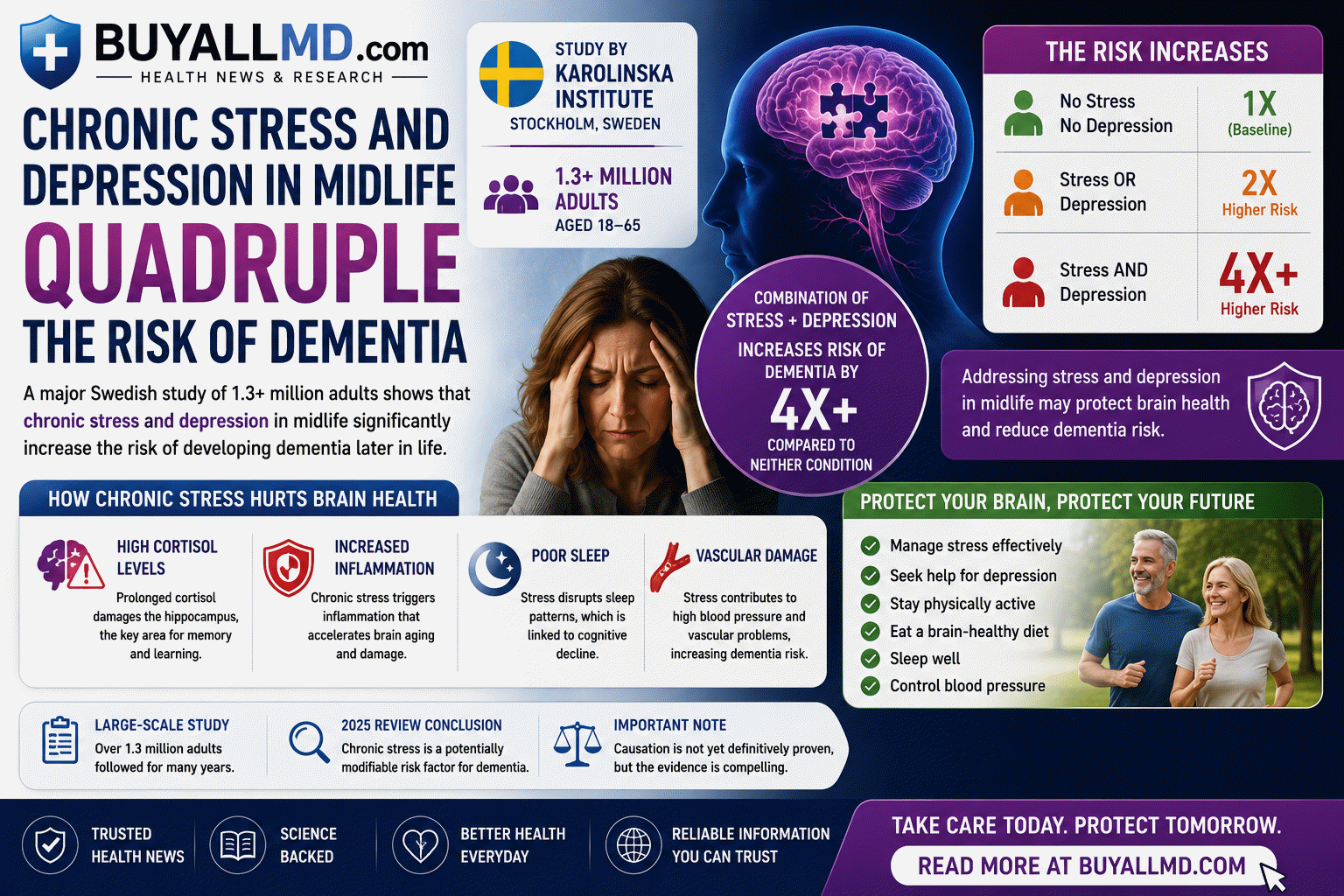
🧫 Karolinska Institutet study of 1.3 million adults shows chronic stress and depression in midlife quadruple the risk of developing dementia.
🧠 The Landmark Study
Scientists at Karolinska Institutet in Stockholm, Sweden, analyzed medical data from over 1.3 million adults aged 18 to 65. The findings are striking: chronic stress and depression in midlife are linked to an elevated risk of developing dementia.
The combination of both conditions increases the risk more than fourfold compared to people without either condition.
📊
1.3 Million Adults analyzed
📈
4x Higher Risk When stress and depression combine
⏰
Midlife Critical Period Ages 18–65 studied
💡 Key Finding: The combination of chronic stress and depression in midlife increases dementia risk more than fourfold compared to individuals with neither condition.
⚙️ The Biological Mechanisms
The mechanism linking chronic stress and depression to dementia is explained through several pathways:
🧠
Cortisol Damage
Chronic stress raises cortisol levels. Prolonged exposure damages the hippocampus — the brain region responsible for memory and learning.
🔥
Chronic Inflammation
Long-term stress amplifies inflammation, which is a known driver of neurodegenerative processes.
😴
Sleep Disruption
Stress and depression disrupt sleep patterns, impairing the brain’s ability to clear metabolic waste.
🩸
Vascular Damage
Chronic stress contributes to cardiovascular risk factors that affect brain blood flow and health.
📚 References: PubMed — Stress & Dementia Research • WHO — Dementia Fact Sheet • Alzheimer’s Association
📊 Dementia Risk Comparison
| Condition | Relative Dementia Risk | Notes |
|---|---|---|
| No Stress or Depression | 1x (baseline) | Reference group |
| Chronic Stress Only | ~2x | Significant elevation |
| Depression Only | ~2x | Significant elevation |
| Chronic Stress + Depression | ~4x | More than fourfold increase |
🛡️ Stress as a Modifiable Risk Factor
A 2025 review highlighted that chronic stress should be considered a potentially modifiable risk factor for dementia — alongside diet, physical activity, and blood pressure control.
🥗
Healthy Diet Mediterranean diet, antioxidants
🏃
Physical Activity Regular exercise, aerobic movement
🩸
BP Control Manage hypertension
🧘
Stress Management Mindfulness, therapy, social support
💡 Key Insight: Midlife may be a critical period when accumulated stress has the most pronounced long-term impact on brain health. Timely stress and depression management can reduce the risk of future cognitive decline.
📋 Study Context
- Institution: Karolinska Institutet, Stockholm, Sweden
- Sample Size: Over 1.3 million adults
- Age Range: 18 to 65 years
- Key Finding: Chronic stress + depression = 4x higher dementia risk
- Critical Period: Midlife stress has the strongest long-term impact on brain health
- Limitation: Causality is not yet definitively proven, but the scale of the study makes the findings compelling
📚 References: Karolinska Institutet — Research • NIA — Dementia & Stress • The Lancet — Dementia Prevention
❓ Frequently Asked Questions
Does chronic stress really cause dementia?
The study shows a strong association, not yet definitively proven causation. However, chronic stress damages the hippocampus, increases inflammation, and disrupts sleep — all of which are linked to cognitive decline.
How much does depression increase dementia risk?
Depression alone is associated with roughly a 2x increased risk. When combined with chronic stress, the risk more than quadruples to 4x.
What can I do to reduce my dementia risk?
Manage stress through mindfulness, therapy, and exercise. Treat depression promptly, maintain a healthy diet, stay physically active, and control blood pressure.
Why is midlife considered a critical period?
Midlife is when accumulated stress has the most pronounced long-term impact on brain health. Timely stress and depression management during this period can reduce the risk of future cognitive decline.
Is the causation between stress and dementia proven?
Not yet definitively proven. However, the scale of the Karolinska Institutet study (1.3 million participants) makes the findings highly compelling and suggests a strong causal link.
⚠️ Medical Disclaimer
This content is for informational and educational purposes only. The research discussed is based on scientific evidence and does not constitute medical advice. Always consult a qualified healthcare professional for mental health concerns, stress management, or cognitive health questions.
© 2026 BuyAllMD.com — Evidence-Based Neuroscience & Public Health
