
- Your cart is empty
- Continue Shopping
Heatstroke Symptoms and Emergency First Aid
-
Dr. Tina Sugandh
- Posted on
🌡️ Heatwave • Emergency Medicine • Public Health
Heatstroke: Symptoms, Prevention & First Aid
📋 WHO Heatwave Alert • Emergency Response • Public Health • 6 min read
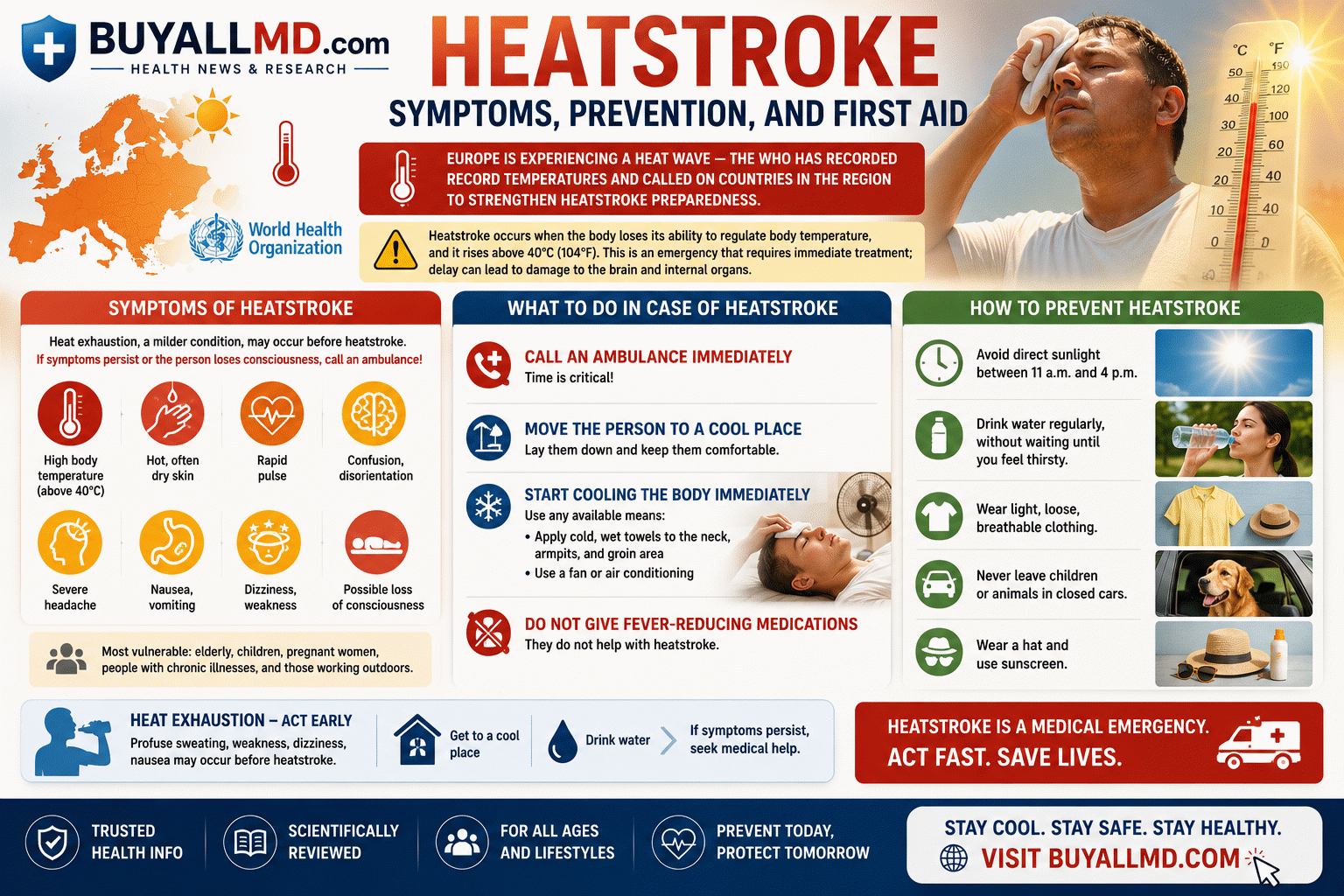
🧫 Europe is experiencing record-breaking temperatures. WHO urges countries to strengthen preparedness for heatstroke emergencies.
🌡️ Understanding Heatstroke
Europe is experiencing an unprecedented heatwave — the WHO has recorded record-breaking temperatures and urged countries in the region to strengthen preparedness for heat-related emergencies.
Heatstroke occurs when the body loses its ability to regulate temperature, and core body temperature rises above 40°C (104°F). This is a life-threatening emergency that requires immediate action — delay can lead to brain damage and organ failure.
🌡️
Life-Threatening Core temp exceeds 40°C
🚨
Medical Emergency Requires immediate help
🧠
Brain Damage Risk Delay can cause permanent damage
💡 WHO Alert: Record-breaking temperatures across Europe require heightened public awareness and emergency preparedness for heatstroke.
📋 Heatstroke Symptoms — Know the Warning Signs
🌡️
Core Signs
- 🔥 Body temperature above 40°C
- 🔥 Hot, often dry skin
- 💓 Rapid, strong pulse
🧠
Neurological Signs
- 🤔 Confusion
- 🌀 Disorientation
- 😵 Severe headache
- 😫 Nausea
- 💤 Possible loss of consciousness
⚖️ Heat Exhaustion vs Heatstroke — Know the Difference
| Feature | 🌤️ Heat Exhaustion | 🔥 Heatstroke |
|---|---|---|
| Body Temperature | Normal or slightly elevated | Above 40°C (104°F) |
| Sweating | Heavy sweating | Often dry skin (may still sweat) |
| Consciousness | Alert | Confusion, disorientation, possible loss |
| Severity | Milder — can progress to heatstroke | 🚨 Life-threatening emergency |
| Action Required | Move to cool place, drink water | Call emergency services immediately |
📌 Important: Heat exhaustion can progress to heatstroke. If symptoms don’t improve or the person loses consciousness — call emergency services immediately.
👴👶 Who Is Most Vulnerable?
👴
Older Adults Reduced heat regulation
👶
Children Immature temperature control
🤰
Pregnant Women Increased metabolic load
💊
Chronic Conditions Diabetes, heart disease, etc.
👷
Outdoor Workers Prolonged sun exposure
🚑 Heatstroke First Aid — What to Do
🚨 Step-by-Step Emergency Response
- 📞 Call emergency services — immediate medical help is essential
- 🏠 Move to a cool place — shade, indoors, or air-conditioned area
- 🛌 Lay the person down — raise legs slightly if possible
- 🧊 Begin cooling immediately — use any available method
🧊
Cooling Methods
- Apply cold, wet towels to neck, armpits, and groin
- Use a fan for air circulation
- Spray with cool water
- Immerse in cool water if possible
🚫
What NOT to Do
- ❌ Do NOT give fever-reducing medications (they don’t work for heatstroke)
- ❌ Do NOT give alcohol or caffeinated drinks
- ❌ Do NOT leave the person alone
💡 Key Point: Fever-reducing medications (paracetamol, ibuprofen) are not effective for heatstroke. Cooling the body externally is the priority.
🛡️ Heatstroke Prevention — Stay Safe
☀️
Avoid Peak Sun
Stay out of direct sunlight from 11:00 AM to 4:00 PM when UV rays are strongest.
💧
Stay Hydrated
Drink water regularly — don’t wait until you’re thirsty. Thirst is a late sign of dehydration.
👕
Dress Appropriately
Wear light-colored, loose-fitting, breathable clothing.
🚗
Never Leave Children or Pets in Cars
Temperatures inside a parked car can reach dangerous levels in minutes — even with windows cracked.
📚 References & Resources
- WHO — Heat and Health Information
- CDC — Extreme Heat & Heatstroke Prevention
- NHS — Heatwave and Hot Weather Health Advice
- Red Cross — Heat Wave Safety
⚠️ Medical Disclaimer
This content is for informational and educational purposes only. Heatstroke is a life-threatening medical emergency. Always call emergency services immediately if you suspect someone has heatstroke. Do not delay treatment or rely solely on this guide for medical care.
© 2026 BuyAllMD.com — Evidence-Based Public Health & Emergency Medicine
