
- Your cart is empty
- Continue Shopping
Squats: The Most Versatile Exercise for Health
-
Dr. Tina Sugandh
- Posted on
💪 Exercise Science • Preventive Medicine • Functional Fitness
Squats: The Most Versatile Exercise for Health — Scientific Review
📋 30 Clinical Studies • Muscle Strength • Bone Density • 6 min read
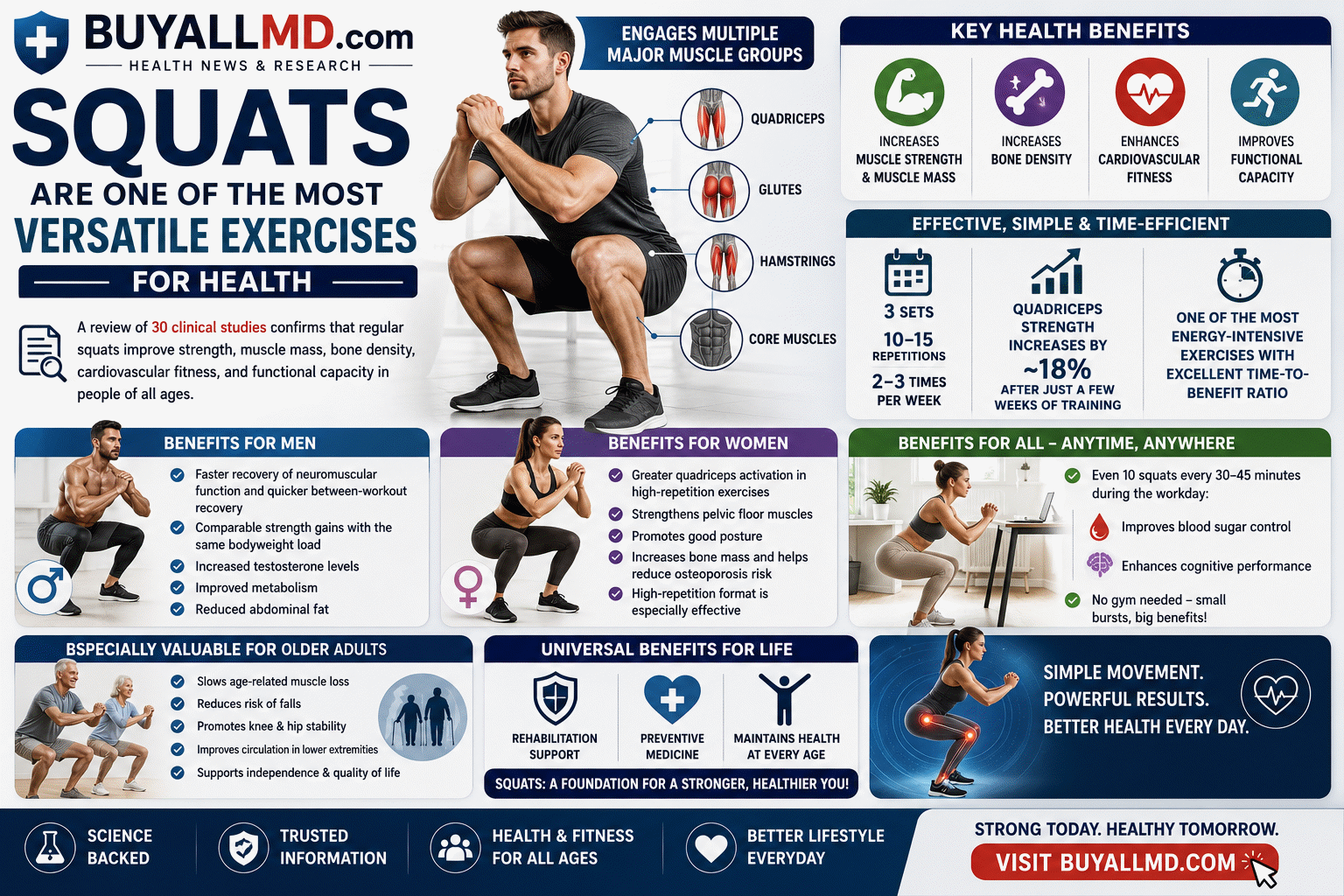
🧫 International review of 30 clinical studies confirms squats improve strength, bone density, cardiovascular fitness, and functional capacity in all ages.
💪 What the Research Shows
An international team of scientists published a review of 30 clinical studies on the effects of squats on human health. The results are clear: regular squats improve muscle strength and mass, increase bone density, enhance cardiovascular fitness, and boost functional capacity in people of all ages.
Squats simultaneously engage multiple major muscle groups — the quadriceps, glutes, hamstrings, and core muscles — making them one of the most energy-intensive and effective exercises in terms of time-to-benefit ratio.
🦵
Muscle Strength +18% quadriceps strength in weeks
🦴
Bone Density Increases bone mass
❤️
Cardiovascular Fitness Improved heart health
💡 Key Finding: Squats are one of the most universal exercises for rehabilitation, preventive medicine, and maintaining health across all ages.
🦵 Major Muscle Groups Engaged
🦵
Quadriceps Front thigh muscles
🍑
Glutes Buttock muscles
🦵
Hamstrings Back thigh muscles
🏋️
Core Muscles Abdomen and lower back
📌 Research Finding: Quadriceps strength can increase by approximately 18% after just a few weeks of regular training.
📋 Recommended Training Protocol
| Parameter | Recommendation | Notes |
|---|---|---|
| Sets | 3 sets | Per session |
| Repetitions | 10–15 reps | Per set |
| Frequency | 2–3 times per week | For consistent results |
💡 Pro Tip: Even 10 squats every 30–45 minutes during the workday improve blood sugar control and cognitive performance — without going to the gym.
⚧️ Gender-Specific Benefits
👨
For Men
- ⚡ Faster neuromuscular recovery
- 🔄 Quicker recovery between workouts
- 📈 Increased testosterone levels
- 🔥 Improved metabolism
- 📉 Decreased abdominal fat
👩
For Women
- 💪 Greater quadriceps activation (high reps)
- 🩸 Strengthened pelvic floor muscles
- 🧘 Promotes good posture
- 🦴 Reduced osteoporosis risk
- 📈 Increased bone mass
📚 Reference: PubMed — Squats & Strength Training Research • ACSM — Exercise Guidelines • WHO — Physical Activity Recommendations
🧓 Squats for Older Adults
Squats are especially valuable for older adults. Regular exercise provides:
⏳
Slows Muscle Loss Slows age-related sarcopenia
🛡️
Fall Prevention Reduces risk of falls
🦵
Knee & Hip Stability Promotes joint stability
🩸
Improved Circulation Better lower extremity blood flow
🧠 Cognitive & Metabolic Benefits
🩸
Blood Sugar Control
Even 10 squats every 30–45 minutes during the workday improve glucose metabolism.
🧠
Cognitive Performance
Regular squat breaks enhance cognitive function and mental clarity throughout the day.
📋 Study Context
- Study Type: Systematic review of 30 clinical studies
- International Collaboration: Multiple research institutions
- Key Finding: Squats improve strength, bone density, cardiovascular fitness, and functional capacity
- Application: Rehabilitation, preventive medicine, and general health
- Universal Benefit: Effective for all age groups and fitness levels
❓ Frequently Asked Questions
How often should I do squats for best results?
Research recommends 3 sets of 10–15 repetitions, 2–3 times per week for consistent results. Even 10 squats every 30–45 minutes during the workday provides benefits.
What muscles do squats work?
Squats engage multiple major muscle groups — quadriceps, glutes, hamstrings, and core muscles — making them one of the most efficient full-body exercises.
Are squats safe for older adults?
Yes! Squats are especially valuable for older adults. They slow age-related muscle loss, reduce fall risk, promote joint stability, and improve circulation. Always start with proper form and consult a healthcare provider.
How much strength improvement can I expect?
Research shows quadriceps strength can increase by approximately 18% after just a few weeks of regular training with proper form and progressive overload.
Do squats help with blood sugar control?
Yes! Even 10 squats every 30–45 minutes during the workday improves blood sugar control and cognitive performance — without needing to go to the gym.
⚠️ Medical Disclaimer
This content is for informational and educational purposes only. Always consult a qualified healthcare professional or certified fitness trainer before starting a new exercise routine, especially if you have pre-existing health conditions or injuries.
© 2026 BuyAllMD.com — Evidence-Based Exercise Science & Preventive Medicine
