
- Your cart is empty
- Continue Shopping
Nutrigenomics: Your Genetics and Diet
-
Dr. Tina Sugandh
- Posted on
🧬 Genetics • Nutrition Science • Personalized Health
Why One Diet Doesn’t Work for Everyone — What Is Nutrigenomics?
📋 University of Guelph • Ariel University • Personalized Nutrition • 6 min read
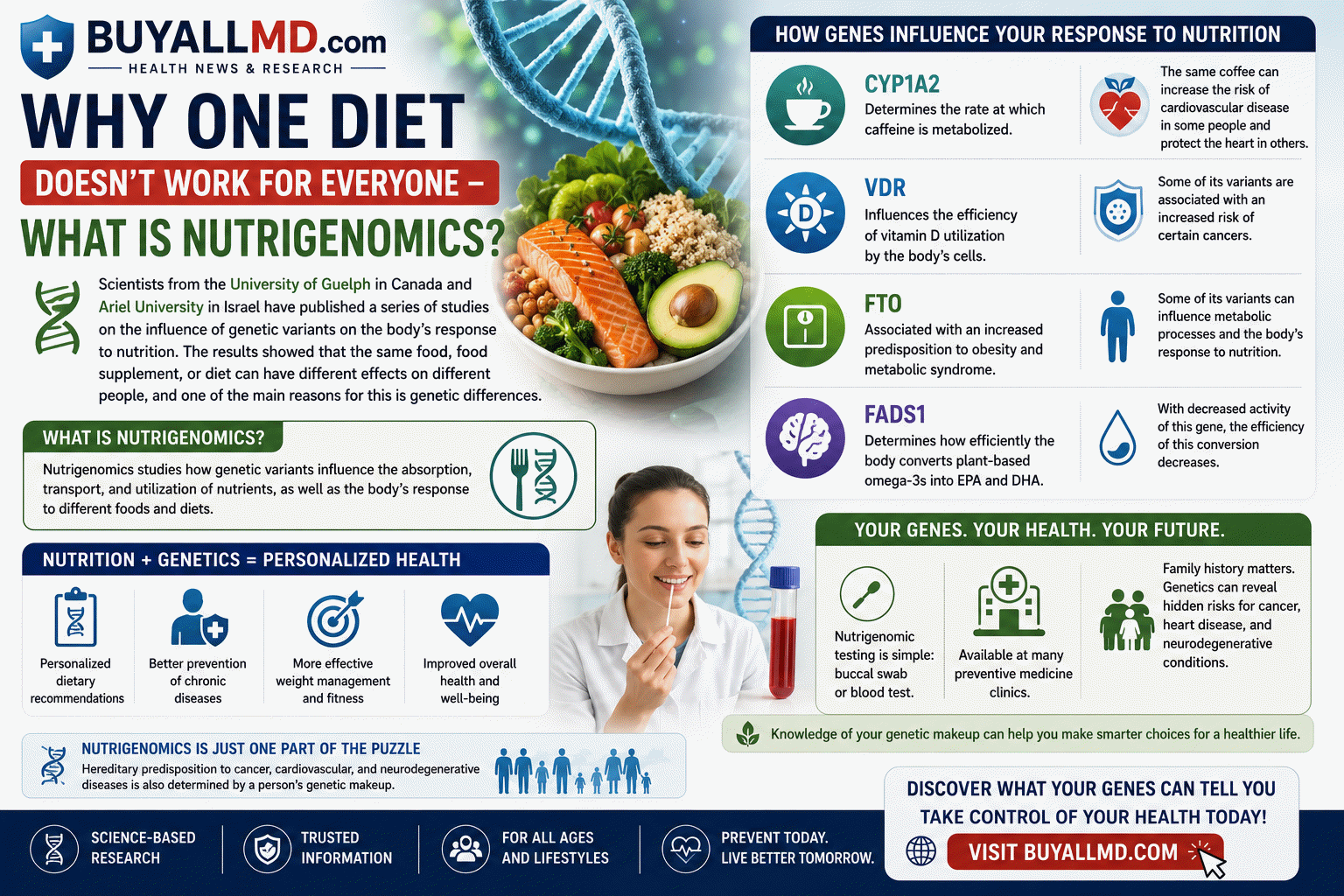
🧫 Scientists from University of Guelph and Ariel University reveal how genetic variations determine individual responses to food, supplements, and diets.
🧬 Why One Size Doesn’t Fit All in Nutrition
Scientists from the University of Guelph in Canada and Ariel University in Israel have published a series of studies on how genetic variations influence the body’s response to nutrition.
The findings show that the same food, supplement, or diet can affect different people in completely different ways — and one of the primary reasons is genetic differences.
🧬
Genetics Matter Same food affects people differently
🔬
Nutrigenomics Study of gene-nutrient interactions
🎯
Personalized Nutrition Tailored dietary recommendations
💡 Key Insight: Nutrigenomics studies how genetic variants affect absorption, transport, and utilization of nutrients — and the body’s response to different foods and dietary patterns.
🔬 What Is Nutrigenomics?
Nutrigenomics is the study of how genetic variations influence the absorption, transport, and utilization of nutrients — and how the body responds to different foods, supplements, and dietary patterns.
This emerging field helps explain why:
- Some people thrive on a Mediterranean diet while others don’t
- Certain supplements work well for one person but not for another
- Individuals have different risks for obesity, diabetes, or heart disease
📚 References: PubMed — Nutrigenomics Research • Nature — Nutrigenomics • WHO — Nutrition Guidance
🧬 Key Genes That Influence Nutrition Response
☕
CYP1A2 — Caffeine Metabolism
This gene determines the speed of caffeine metabolism. This is why the same coffee can:
- ⚠️ Increase cardiovascular risk in slow metabolizers
- ✅ Protect the heart in fast metabolizers
☀️
VDR — Vitamin D Receptor
This gene affects how effectively cells utilize vitamin D. Some variants are associated with:
- 🦴 Altered risk of certain cancers
- 🛡️ Changes in immune function
- 📉 Bone density variations
⚖️
FTO — Obesity Risk Gene
This gene is associated with increased predisposition to obesity and metabolic syndrome. Certain variants can influence:
- ⚖️ Metabolic rate
- 🍔 Response to dietary interventions
- 🩸 Risk of insulin resistance
🧠
FADS1 — Omega-3 Conversion
This gene determines how effectively the body converts plant-based omega-3 (ALA) into EPA and DHA — essential for brain and tissue health.
- 🧠 High activity: Efficient conversion to brain-healthy omega-3s
- ⚠️ Low activity: Reduced conversion — may require direct EPA/DHA supplementation
📊 Key Nutrigenomic Genes Overview
| Gene | Function | Key Nutrient | Potential Impact |
|---|---|---|---|
| CYP1A2 | Caffeine metabolism | ☕ Caffeine | Heart risk vs. protection |
| VDR | Vitamin D utilization | ☀️ Vitamin D | Cancer risk, immune function |
| FTO | Obesity predisposition | ⚖️ Macronutrients | Metabolic syndrome risk |
| FADS1 | Omega-3 conversion | 🧠 Omega-3 (ALA → EPA/DHA) | Brain and tissue health |
🧬 Beyond Nutrition — Genetics and Disease Risk
Nutrigenomics is just one area of genetics. Hereditary predisposition to cancer, cardiovascular, and neurodegenerative diseases is also determined by genetic variations.
🫁
Lung Cancer
Family history may indicate increased genetic risk
❤️
Early Heart Attack
Family history of early heart attacks may signal elevated genetic risk
🧠
Neurodegenerative Disease
Alzheimer’s, Parkinson’s may have genetic components
🧪 How Nutrigenomic Testing Works
A nutrigenomic test can be performed through:
👄
Buccal Swab Painless cheek swab
🩸
Blood Sample Standard blood draw
🏥
Available At Many preventive medicine clinics
💡 Key Point: Nutrigenomic testing helps identify genetic variants that affect nutrient metabolism, enabling personalized dietary recommendations based on individual genetic profiles.
❓ Frequently Asked Questions
What is nutrigenomics?
Nutrigenomics is the study of how genetic variations affect individual responses to nutrients, foods, supplements, and dietary patterns.
Why does the same diet work differently for different people?
Genetic variations in genes like CYP1A2, VDR, FTO, and FADS1 affect how the body processes nutrients, caffeine, and fats — leading to different responses to the same foods.
What is the FTO gene and why is it important?
The FTO gene is associated with predisposition to obesity and metabolic syndrome. Certain variants can influence metabolism and response to dietary interventions.
How is nutrigenomic testing done?
Testing is typically done through a buccal swab (cheek swab) or blood sample. Results are analyzed to identify genetic variants that affect nutrient metabolism.
Does genetics influence disease risk beyond nutrition?
Yes. Hereditary predisposition to cancer, cardiovascular, and neurodegenerative diseases is also influenced by genetic variations. Family history can indicate elevated genetic risk.
⚠️ Medical Disclaimer
This content is for informational and educational purposes only. Nutrigenomic testing and personalized nutrition should be conducted under the guidance of qualified healthcare professionals. Genetic information does not replace clinical judgment or medical advice. Always consult your healthcare provider before making significant dietary or lifestyle changes.
© 2026 BuyAllMD.com — Evidence-Based Genetics & Nutrition Science
