
- Your cart is empty
- Continue Shopping
Alcohol in Youth May Change the Brain for Decades
-
Dr. Tina Sugandh
- Posted on
🧠 Neuroscience • Addiction • Mental Health
How Alcohol in Youth May Change the Brain for Decades
📋 University of Massachusetts Amherst • Stress • Cognitive Vulnerability • 6 min read
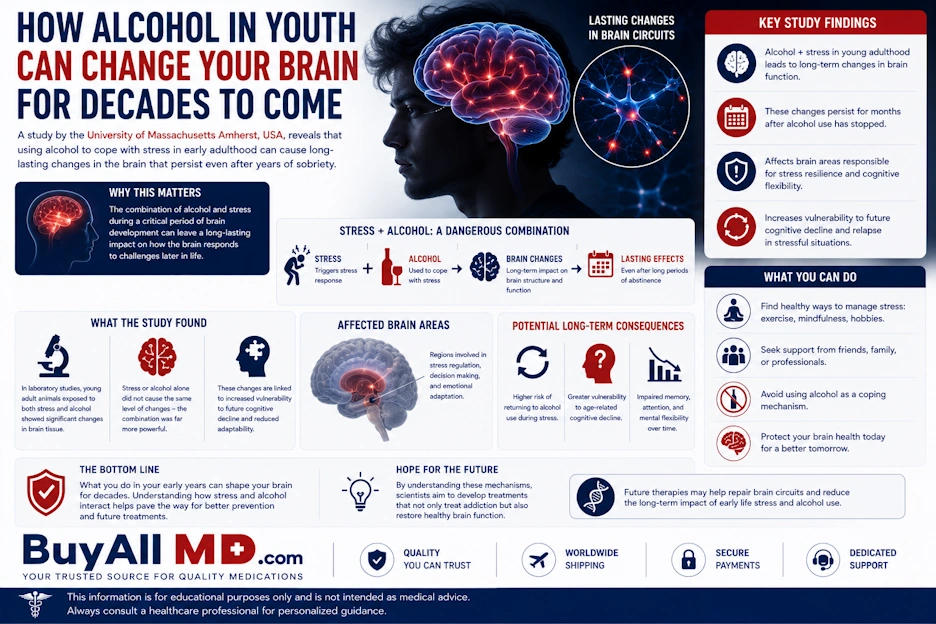
🧫 University of Massachusetts Amherst research shows that combining alcohol and stress in young adulthood may leave lasting brain changes that persist for decades.
🧠 The Research — How Alcohol and Stress Interact
Scientists from the University of Massachusetts Amherst conducted a laboratory study to understand how the combined effects of alcohol and stress in young adulthood influence the brain over time.
The findings revealed that using alcohol as a way to cope with stress during early adulthood can leave a long-lasting trace in brain function — one that persists even after extended periods of abstinence.
🧬
Long-Lasting Changes Effects persist after abstinence
🧠
Brain Region Affected Stress resilience and flexibility
⚠️
Combined Effect Stress + alcohol > either alone
💡 Key Finding: The changes affected brain regions responsible for stress resilience and the ability to flexibly respond to challenges. Neither stress nor alcohol alone caused such pronounced changes — but their combination was significantly more powerful.
⚙️ What Happens in the Brain
The researchers identified changes in neural tissue linked to:
⚠️
Increased Vulnerability
The brain becomes more susceptible to future cognitive decline and dysfunction.
🔄
Relapse Risk
Changes may increase the likelihood of returning to alcohol use during stressful situations.
🧠
Cognitive Decline
Increased vulnerability to age-related cognitive decline later in life.
📌 Key Insight: The combination of stress and alcohol during young adulthood may create a vicious cycle — stress leads to alcohol use, which alters the brain, making the individual more vulnerable to stress and relapse in the future.
🔮 Long-Term Implications
According to the researchers, these changes may:
- Increase the likelihood of relapse during stressful situations
- Make the brain more vulnerable to age-related cognitive decline
- Create a cycle of stress, alcohol use, and worsening vulnerability
Understanding this mechanism could help develop treatments that focus not only on stopping alcohol consumption but also on restoring impaired brain functions.
💡 Future Direction: The authors believe that understanding this mechanism will help in developing therapies aimed not only at stopping alcohol use but also at restoring the impaired brain functions.
💊 Support for Alcohol Dependence Recovery
For individuals struggling with alcohol dependence, several evidence-based medications are available to support recovery and maintain sobriety:
💊
Nokrono 500mg Disulfiram — creates an aversive reaction to alcohol, discouraging drinking
💊
Acamprol 333mg Acamprosate — reduces cravings and supports neurological stability during abstinence
💊
Naltima 50mg Naltrexone — blocks the rewarding effects of alcohol, reducing cravings and relapse risk
💡 Treatment Note: These medications are most effective when used as part of a comprehensive treatment plan that includes counseling, behavioral therapy, and support groups. Always consult a healthcare provider before starting any medication.
✅ Key Takeaways
🧠
Early Adulthood Matters Alcohol + stress in youth leaves lasting brain changes
🔄
Vicious Cycle Stress → alcohol → brain changes → more vulnerability
🧬
Abstinence Isn’t Enough Changes persist even after stopping alcohol
❓ Frequently Asked Questions
Does alcohol in youth cause permanent brain damage?
The study shows that alcohol combined with stress in young adulthood can cause long-lasting changes in brain function that persist even after long periods without alcohol. However, the extent of “permanence” requires further research.
Why does stress make alcohol more harmful?
The study found that the combination of stress and alcohol had a significantly stronger effect than either factor alone. Stress may amplify alcohol’s effects on the brain regions responsible for resilience and flexible responding.
What medications can support alcohol recovery?
Evidence-based medications include Disulfiram (Nokrono) for aversion therapy, Acamprosate (Acamprol) for reducing cravings, and Naltrexone (Naltima) for blocking the rewarding effects of alcohol. Always consult a healthcare provider.
Can these brain changes be reversed?
The researchers note that understanding these mechanisms could lead to treatments aimed at restoring impaired brain functions. However, more research is needed to determine if and how these changes can be reversed.
Who conducted this research?
The study was conducted by scientists from the University of Massachusetts Amherst in the United States.
📚 References & Resources
- University of Massachusetts Amherst — Research
- PubMed — Alcohol & Stress Brain Research
- NIAAA — Alcohol and the Brain
- WHO — Alcohol Fact Sheet
⚠️ Medical Disclaimer
This content is for informational and educational purposes only. The research findings are based on laboratory studies and do not constitute medical advice. If you or someone you know is struggling with alcohol use, please seek help from a qualified healthcare professional or addiction support service. Medications for alcohol dependence are prescription-only and should be used under medical supervision.
© 2026 BuyAllMD.com — Evidence-Based Neuroscience & Public Health News
