
- Your cart is empty
- Continue Shopping
Alpha-Lipoic Acid for Diabetes
-
Dr. Tina Sugandh
- Posted on
🧬 Nutrition Science • Antioxidants • Metabolic Health
Alpha-Lipoic Acid: More Than Just an Antioxidant
📋 Taipei Medical University • Diabetes • Diabetic Neuropathy • 6 min read
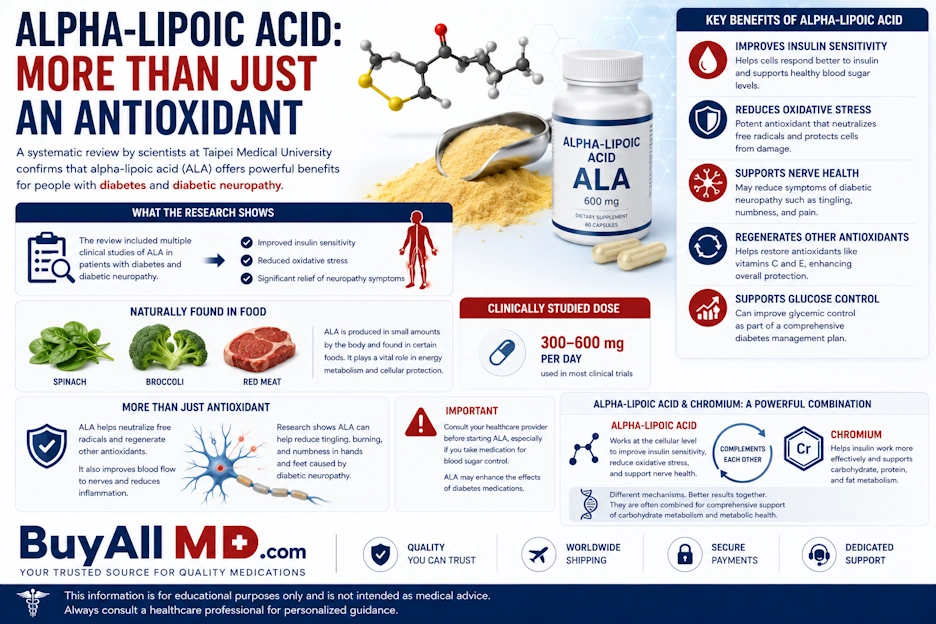
🧫 Taipei Medical University systematic review confirms alpha-lipoic acid benefits for insulin sensitivity, oxidative stress, and diabetic neuropathy.
🧬 What the Research Shows
Scientists from Taipei Medical University in Taiwan have conducted a systematic review of clinical studies on alpha-lipoic acid. The analysis included research on its use in diabetes and diabetic neuropathy.
The results showed that supplementation may contribute to improved insulin sensitivity, reduced oxidative stress, and relief from diabetic neuropathy symptoms.
🩸
Improves Insulin Sensitivity Enhances cellular glucose uptake
🛡️
Reduces Oxidative Stress Neutralizes free radicals
🧠
Neuropathy Relief Eases tingling and numbness
💡 Key Finding: The systematic review confirms alpha-lipoic acid’s potential to improve glycemic control and alleviate tingling and numbness in the hands and feet associated with diabetic neuropathy.
🧪 What Is Alpha-Lipoic Acid?
Alpha-lipoic acid is produced by the body in small amounts and is also found in spinach, broccoli, and red meat. It is a powerful antioxidant that:
- Neutralizes free radicals — protecting cells from oxidative damage
- Regenerates other antioxidants — including vitamins C and E
- Supports mitochondrial function — energy production in cells
🥬
Spinach Rich dietary source
🥦
Broccoli Natural source
🥩
Red Meat Contains small amounts
🩸 Benefits for Diabetes and Diabetic Neuropathy
📉
Improved Glycemic Control
Studies show alpha-lipoic acid may help lower blood glucose levels and improve insulin sensitivity.
🧠
Neuropathy Symptom Relief
Alleviates tingling, burning, and numbness in extremities — common symptoms of diabetic neuropathy.
🛡️
Oxidative Stress Reduction
Neutralizes free radicals and reduces oxidative damage associated with diabetes complications.
💊 Recommended Dosage
| Condition | Typical Dose | Duration |
|---|---|---|
| Diabetes Support | 300–600 mg daily | Ongoing |
| Diabetic Neuropathy | 600 mg daily | 3–5 weeks |
| General Antioxidant Support | 100–300 mg daily | Ongoing |
📌 Important: Before starting supplementation, consult your healthcare provider — especially if you are taking medications for blood sugar control, as alpha-lipoic acid may enhance their effects.
🔄 Alpha-Lipoic Acid and Chromium — A Powerful Combination
Like chromium, alpha-lipoic acid helps support carbohydrate metabolism — but through a different mechanism.
This is why they are often considered for combined use as part of a comprehensive approach to supporting glucose metabolism and metabolic health.
🧬
Chromium
Enhances insulin sensitivity and glucose uptake into cells.
🛡️
Alpha-Lipoic Acid
Reduces oxidative stress, improves insulin sensitivity, and protects nerves.
💡 Synergy: Combined use of chromium and alpha-lipoic acid may offer complementary benefits for metabolic health, targeting both insulin sensitivity and oxidative stress.
❓ Frequently Asked Questions
What is alpha-lipoic acid used for?
Alpha-lipoic acid is used to support blood sugar control, reduce oxidative stress, and relieve symptoms of diabetic neuropathy. It’s also taken as a general antioxidant supplement.
Is alpha-lipoic acid effective for neuropathy?
Yes. Studies show that alpha-lipoic acid can reduce tingling, burning, and numbness in the extremities — common symptoms of diabetic neuropathy.
How much alpha-lipoic acid should I take?
Most clinical studies use doses of 300–600 mg per day. Always consult your healthcare provider before starting supplementation, especially if you are on diabetes medication.
Can I take alpha-lipoic acid with chromium?
Yes. They work through different mechanisms and are often considered for combined use as part of a comprehensive approach to supporting glucose metabolism.
Who conducted this research?
The systematic review was conducted by scientists from Taipei Medical University in Taiwan.
📚 References & Resources
- PubMed — Alpha-Lipoic Acid Research
- American Diabetes Association — Neuropathy Information
- WHO — Diabetes Fact Sheet
- NIH — Dietary Supplements
⚠️ Medical Disclaimer
This content is for informational and educational purposes only. Alpha-lipoic acid is a dietary supplement and should not replace prescribed medical treatment. Always consult a qualified healthcare professional before starting any supplement regimen, especially if you have diabetes, are taking medications, or have underlying health conditions.
© 2026 BuyAllMD.com — Evidence-Based Nutrition Science
