
- Your cart is empty
- Continue Shopping
How Evening Scrolling Is Linked to Insomnia
-
Dr. Tina Sugandh
- Posted on
😴 Sleep Health • Digital Wellness • Public Health
Scientists Discover How Evening Scrolling Is Linked to Insomnia
📋 Norwegian Institute of Public Health • University of Bergen • 45,000 Students • 6 min read
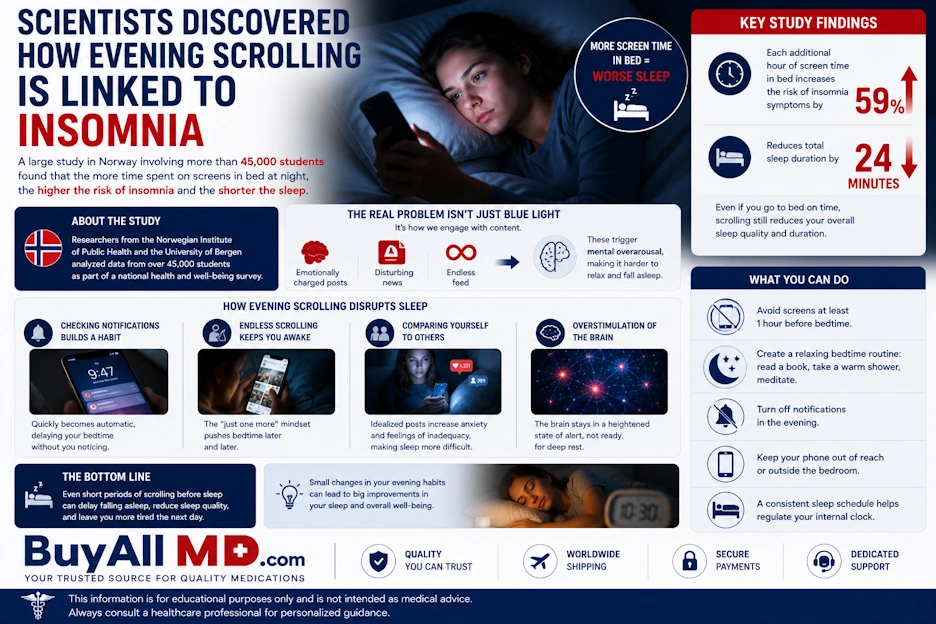
🧫 Norwegian study of 45,000 students reveals each extra hour of evening screen use increases insomnia risk by 59%.
📊 The Study — 45,000 Students Analyzed
Scientists from the Norwegian Institute of Public Health, in collaboration with researchers from the University of Bergen, analyzed data from over 45,000 students as part of a national health and well-being survey.
They found that each additional hour of screen use after getting into bed increased the likelihood of experiencing insomnia symptoms by 59% and reduced total sleep duration by approximately 24 minutes.
45,000+
Students Studied Large-scale national survey
59%
Higher Insomnia Risk Per extra hour of screen use
24 min
Sleep Loss Average reduction per hour
💡 Key Finding: The problem isn’t just the blue light — it’s the emotional content and the habitual nature of scrolling that keeps the brain aroused and delays sleep.
🧠 Why Scrolling Before Bed Disrupts Sleep
The researchers emphasize that the issue is not just about blue light. The real problem lies in how we interact with content:
📱
Emotional Arousal
Emotionally charged posts, disturbing news, and endless feeds keep the brain in a heightened state of arousal, making it harder to relax and fall asleep.
🔄
Habit Formation
Checking notifications and automatic scrolling quickly become habits that subtly push bedtime later and later.
😔
Social Comparison
Viewing idealized posts before bed increases anxiety and feelings of inadequacy, further interfering with sleep.
📌 Key Insight: Scrolling social media before bed doesn’t just delay sleep — it reduces sleep quality and shortens overall rest time, even if you eventually get into bed at a reasonable hour.
🌙 Tips for Better Sleep
⏰
Set a Digital Curfew
Stop using screens at least 30–60 minutes before bedtime to allow your brain to wind down.
📱
Remove Devices from Bedroom
Keep your phone away from the bed to avoid the temptation of late-night scrolling.
🧘
Create a Relaxing Routine
Replace scrolling with reading, meditation, or gentle stretching to signal your body it’s time to sleep.
💊 Support for Insomnia — Dayvigo (Lemborexant)
For individuals who continue to struggle with insomnia despite lifestyle changes, prescription medications like Dayvigo (Lemborexant) may offer support.
💊
Dayvigo (Lemborexant) — A Modern Approach to Insomnia
Dayvigo contains Lemborexant, a dual orexin receptor antagonist (DORA) that helps regulate the sleep-wake cycle. Unlike traditional sleep medications, it selectively targets wake-promoting orexin receptors, allowing for more natural sleep architecture with a lower risk of dependence.
Available in 5 mg and 10 mg strengths, Dayvigo is indicated for chronic insomnia, helping patients fall asleep faster and stay asleep longer.
⚠️ Important: Dayvigo is a prescription medication and should only be used under medical supervision. It is not a substitute for healthy sleep hygiene practices. Always consult a healthcare provider before starting any new medication.
❓ Frequently Asked Questions
Does blue light from screens cause insomnia?
The Norwegian study found that the issue is not just about blue light. While blue light can suppress melatonin, the emotional content and habitual nature of scrolling are equally important factors that keep the brain aroused and delay sleep.
How much does evening screen use affect sleep?
Each additional hour of screen use after getting into bed increases insomnia risk by 59% and reduces total sleep by approximately 24 minutes.
What is Dayvigo and how does it work?
Dayvigo (Lemborexant) is a dual orexin receptor antagonist that regulates the sleep-wake cycle by blocking wake-promoting signals in the brain. It helps patients fall asleep faster and stay asleep longer.
Can lifestyle changes fix insomnia?
For many people, healthy sleep hygiene — including reducing screen time before bed, creating a relaxing bedtime routine, and keeping devices out of the bedroom — can significantly improve sleep. However, chronic insomnia may require professional evaluation and treatment.
Who conducted this research?
The study was conducted by scientists from the Norwegian Institute of Public Health in collaboration with the University of Bergen, analyzing data from over 45,000 students.
📚 References & Resources
- PubMed — Screen Use and Insomnia Research
- Norwegian Institute of Public Health
- University of Bergen — Research
- WHO — Sleep Disorders Fact Sheet
⚠️ Medical Disclaimer
This content is for informational and educational purposes only. Insomnia is a medical condition that should be evaluated by qualified healthcare professionals. Dayvigo (Lemborexant) is a prescription medication and should only be used under the supervision of a healthcare provider. Lifestyle changes should be discussed with your doctor.
© 2026 BuyAllMD.com — Evidence-Based Sleep Health & Public Health News
