
- Your cart is empty
- Continue Shopping
Green Tea vs. Black Tea Kombucha
-
Dr. Tina Sugandh
- Posted on
🧪 Fermentation Science • Antioxidants • Functional Beverages
Kombucha Benefits Depend on the Tea: Scientists Compare Five Types
📋 Wrocław Medical University Study • Green Tea • Oolong • Antioxidant Activity • 5 min read
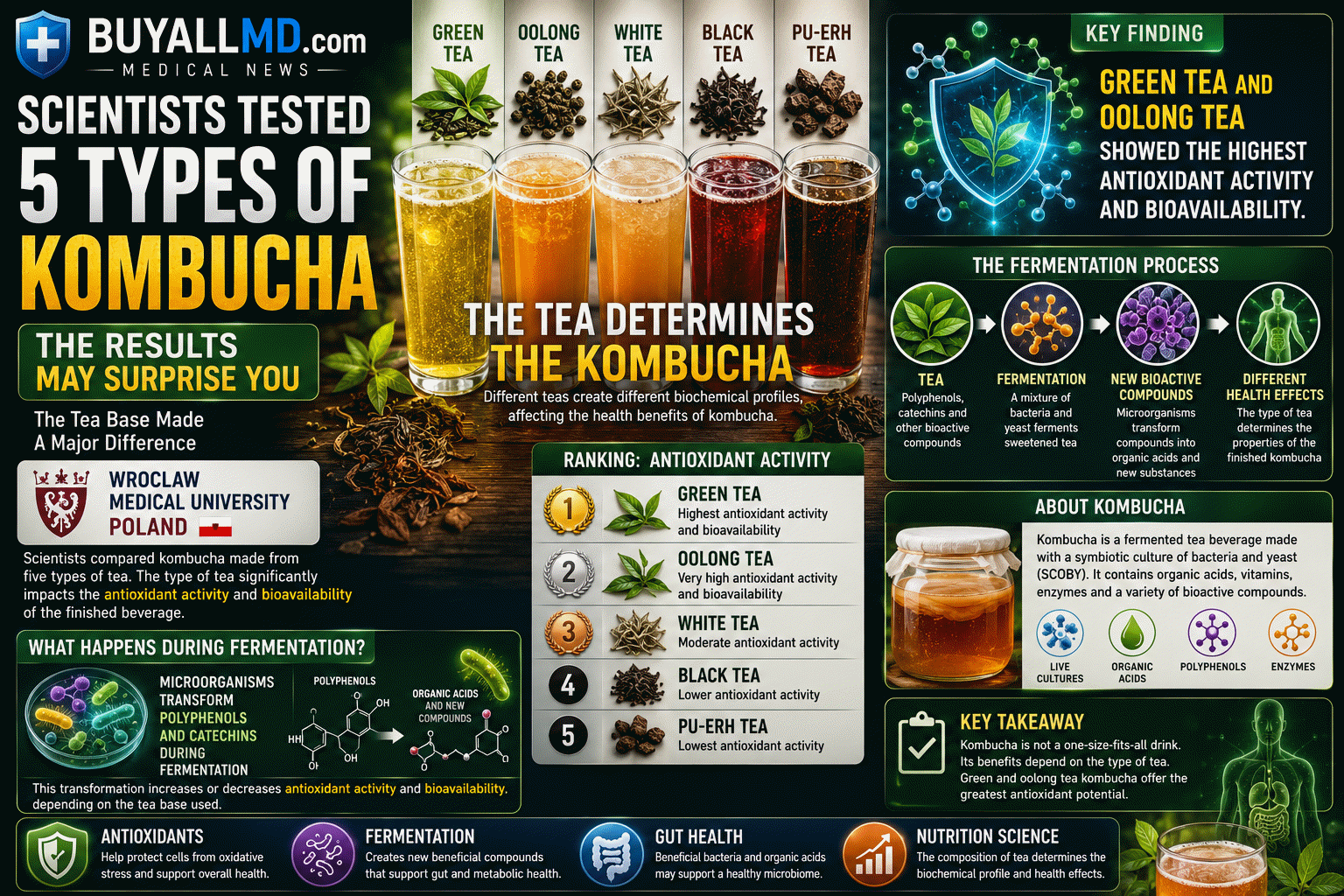
🧫 New research from Poland reveals that the health benefits of kombucha depend entirely on the type of tea used for fermentation.
Scientists from Wrocław Medical University in Poland have demonstrated that kombucha is not a one-size-fits-all beverage. By comparing five types of tea — black, green, white, oolong, and pu-erh — they found that the choice of tea significantly determines the final drink’s antioxidant activity and bioavailability. Green tea and oolong emerged as the clear winners.
📋 What the Wrocław Medical University Study Revealed
Researchers compared kombucha fermented from five tea varieties to understand how the original tea composition affects the final product. The results were striking:
- Green tea and oolong kombucha showed the highest antioxidant activity and bioavailability.
- Black tea and pu-erh produced kombucha with significantly lower antioxidant potential.
- White tea performed moderately, falling between the two groups.
These findings confirm that the tea base is not just about flavor — it fundamentally shapes the biochemical profile of the finished beverage.
💡 Key takeaway: Kombucha is not a universal health drink. The type of tea determines not only taste but also the biochemical profile and health benefits of the final product.
⚙️ How Fermentation Transforms Tea Into Kombucha
Kombucha is produced by fermenting sweetened tea with a SCOBY (Symbiotic Culture of Bacteria and Yeasts). During fermentation, microorganisms transform the tea’s bioactive compounds:
🍵
Polyphenols
Broken down and converted into organic acids and new bioactive metabolites
🧬
Catechins
Transformed into more bioavailable compounds with enhanced activity
🦠
Microbial Action
Bacteria and yeasts create organic acids, vitamins, and enzymes during fermentation
This is precisely why the original tea composition matters so much — it provides the raw material that microorganisms transform into the final bioactive compounds.
📊 Tea Type Comparison: Antioxidant Activity Ranking
🥇
Green Tea
Highest antioxidant activity & bioavailability
🥈
Oolong
Comparable to green tea — excellent bioavailability
🥉
White Tea
Moderate antioxidant activity
4️⃣
Black Tea
Lower antioxidant potential
5️⃣
Pu-erh
Lowest antioxidant activity among tested
📌 Why it matters: Higher antioxidant activity and bioavailability mean the beneficial compounds are more effectively absorbed and utilized by the body. Green tea and oolong kombucha provide the greatest potential health benefits.
🥤 How to Choose the Right Kombucha
🟢
For Maximum Antioxidants
Choose kombucha made from green tea or oolong — highest antioxidant activity and bioavailability.
⚪
For Milder Flavor
White tea kombucha offers a delicate taste with moderate antioxidant benefits.
⚫
For Traditional Taste
Black tea and pu-erh provide classic kombucha flavor with lower antioxidant levels.
⚠️ Precautions and Considerations
- Home brewing risks — improper fermentation can lead to contamination with harmful bacteria or mold.
- Acidity — kombucha is acidic and may erode tooth enamel or cause digestive discomfort in sensitive individuals.
- Alcohol content — trace amounts of alcohol are produced during fermentation (typically less than 0.5%, but can be higher).
- Medication interactions — kombucha may interact with certain medications; consult your doctor if you have health concerns.
- Sugar content — commercial kombucha often contains added sugar; check labels carefully.
✅ Key Takeaways
- Kombucha benefits depend entirely on the type of tea used.
- Green tea and oolong produce kombucha with the highest antioxidant activity.
- Fermentation transforms polyphenols and catechins into new bioactive compounds.
- Kombucha is not a one-size-fits-all functional beverage.
⚠️ Important Caveats
- Results are from laboratory analysis; human clinical trials are needed.
- Individual responses to antioxidants vary.
- Commercial kombucha may have added sugars and flavors.
- Consult healthcare provider if you have underlying conditions.
🔬 Scientific References & External Resources
- PubMed — Kombucha antioxidant research
- ScienceDirect — Kombucha fermentation overview
- Wrocław Medical University — Official research page
- NIH — Antioxidants and health
⚠️ Medical Disclaimer: This article is for educational purposes only and does not constitute medical advice. Kombucha is not a substitute for medical treatment. Always consult a qualified healthcare professional before making changes to your diet, especially if you have pre-existing medical conditions or are taking medications.
© 2026 BuyAllMD.com — Evidence-Based Nutrition Science & Functional Beverage Research
