
- Your cart is empty
- Continue Shopping



Scientists Find Genetic Variant That Slows Aging
-
Dr. Tina Sugandh
- Posted on
🧬 Genetics • Longevity • Inflammation • Preventive Medicine
Scientists Find Genetic Variant Linked to Slower Aging
📋 Leiden University Medical Center • ESHG Conference • Longevity Families • 5 min read
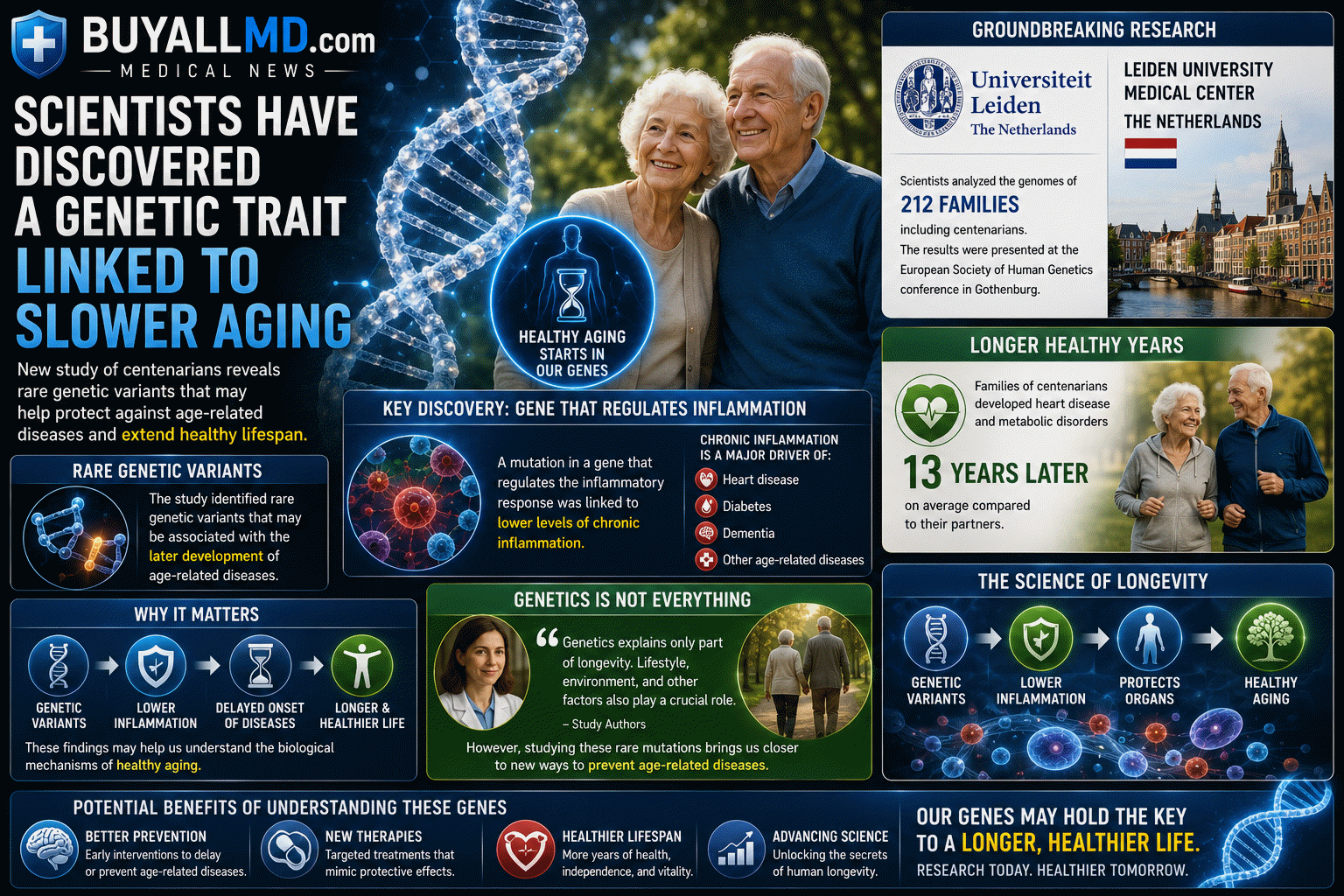
🧫 Dutch scientists have identified rare genetic variants linked to delayed onset of age-related diseases and slower biological aging.
Researchers from Leiden University Medical Center in the Netherlands have presented groundbreaking findings on longevity at the European Society of Human Genetics (ESHG) conference in Gothenburg. Their large-scale study of 212 families revealed rare genetic variants that may delay the onset of age-related diseases — with one mutation in particular showing a remarkable effect on inflammation regulation.
📋 What the Leiden University Study Revealed
The study analyzed the genomes of 212 families with a history of longevity to identify genetic factors that contribute to healthy aging. Key findings include:
- Identification of rare genetic variants associated with delayed onset of age-related diseases.
- A specific mutation in a gene regulating inflammatory response was linked to significantly lower levels of chronic inflammation.
- In long-lived families, heart disease and metabolic disorders developed an average of 13 years later compared to their partners.
💡 Key takeaway: Chronic inflammation is a major driver of aging. This genetic mutation appears to protect against excessive inflammation, potentially delaying age-related diseases by more than a decade.
🔥 Why Inflammation Matters in Aging
Chronic, low-grade inflammation — often called “inflammaging” — is now recognized as a key driver of age-related diseases. This persistent inflammatory state contributes to:
❤️
Heart Disease
Atherosclerosis and cardiovascular damage
🩸
Type 2 Diabetes
Insulin resistance and metabolic dysfunction
🧠
Dementia
Neuroinflammation and cognitive decline
🦴
Arthritis
Joint inflammation and degeneration
The newly identified genetic mutation appears to dampen this inflammatory response, potentially explaining why carriers remain healthier for longer.
📊 The Numbers: How Much Longer?
13
Years Later
Heart disease and metabolic disorders developed 13 years later in long-lived families compared to partners
212
Families Studied
Large-scale genomic analysis of 212 families with longevity history
📌 Important context: A 13-year delay in disease onset is clinically significant. It means more years of healthy, active life — not just extended lifespan, but extended healthspan.
🧬 Genetics vs. Lifestyle: What Really Matters?
The researchers emphasize an important point: genetics explains only part of longevity. While these rare genetic variants are protective, they are not the whole story.
🧬
Genetics — Part of the Picture
Rare genetic variants contribute to slower aging and delayed disease onset, but they are not the only factor.
🥗
Lifestyle — The Other Half
Diet, physical activity, stress management, and sleep quality also play crucial roles in healthy aging.
🔬
Future Applications
Understanding these mutations may lead to new preventive strategies and targeted therapies for age-related diseases.
🔭 What This Means for the Future
The discovery opens several exciting avenues for future research:
- New therapeutic targets — drugs that mimic the anti-inflammatory effect of this genetic mutation.
- Biomarker development — identifying individuals at higher risk of accelerated aging.
- Personalized prevention — tailoring lifestyle interventions based on genetic risk profiles.
- Understanding healthy aging — deeper insights into the biological mechanisms that protect against disease.
✅ Key Takeaways
- Rare genetic variants identified in long-lived families may delay age-related diseases.
- A mutation in an inflammation-regulating gene appears to reduce chronic inflammation.
- Heart disease and metabolic disorders developed 13 years later in mutation carriers.
- Genetics is only part of the longevity equation — lifestyle still matters.
⚠️ Important Caveats
- These are rare genetic variants — not present in most people.
- Genetics alone does not guarantee longevity or health.
- Results are from family-based studies; individual responses vary.
- Further research is needed to develop therapeutic applications.
🔬 Scientific References & External Resources
- PubMed — Longevity genetics research
- ESHG — European Society of Human Genetics
- Leiden University Medical Center — Research page
- NIH — Inflammaging and age-related diseases
⚠️ Medical Disclaimer: This article is for educational purposes only and does not constitute medical advice. Genetic variants associated with longevity are not predictive of individual health outcomes. Always consult a qualified healthcare provider for personalized health recommendations, including genetic testing and preventive strategies.
© 2026 BuyAllMD.com — Evidence-Based Genetics & Preventive Medicine Research
