
- Your cart is empty
- Continue Shopping
What Is Preventive Medicine? A Guide to Staying Healthy
-
Dr. Tina Sugandh
- Posted on
🩺 Public Health • Preventive Medicine • Lifestyle Medicine
Preventive Medicine: When Prevention Is the Best Treatment
📍 WHO Guidelines • Chronic Disease Prevention • Lifestyle Medicine • 6 min read
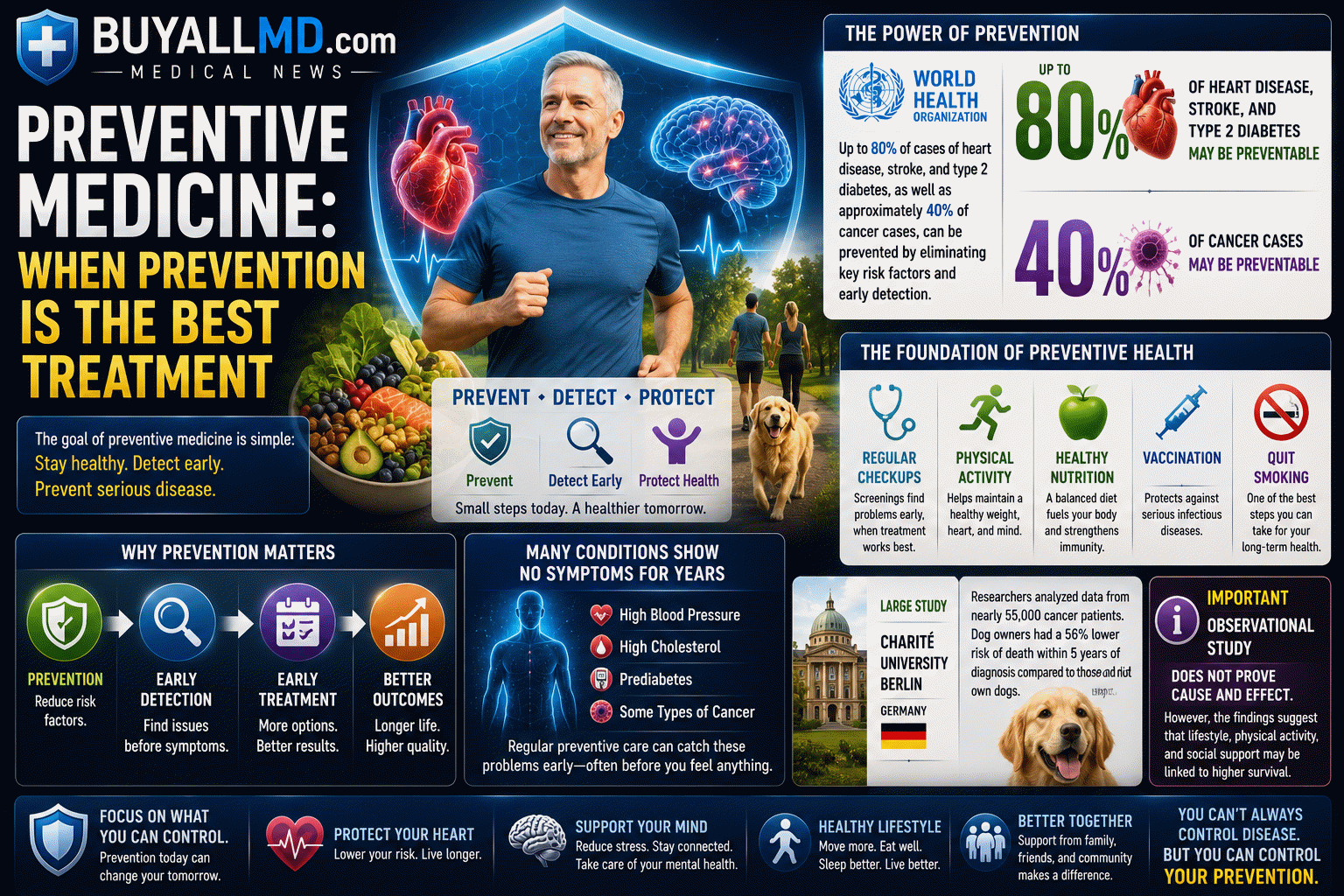
🩺 Preventive medicine focuses on early detection, healthy lifestyle choices, and reducing risk factors before disease develops.
Modern healthcare requires a shift in focus: not only treating diseases but also promoting healthy eating, physical activity, and a lifestyle that helps reduce the risk of developing them. A key part of this effort is educating people about basic health prevention. This is the principle upon which preventive medicine is based.
📋 What Is Preventive Medicine?
Preventive medicine is an approach that aims not to treat a disease after symptoms appear, but to prevent its development or detect it at an early stage. This approach helps reduce the burden of disease and identify dangerous conditions when treatment is most effective.
The main goal is to maintain a person’s health for as long as possible and reduce the risk of developing serious diseases.
💡 Key principle: “An ounce of prevention is worth a pound of cure.” — Benjamin Franklin. Preventive medicine embodies this timeless wisdom with modern scientific evidence.
📊 The Numbers: What Prevention Can Achieve
According to the World Health Organization (WHO), up to:
80%
of heart disease, stroke, and type 2 diabetes cases can be prevented
40%
of cancer cases can be prevented
These conditions can be prevented by eliminating key risk factors and through early detection. Therefore, increasing attention is being paid to:
- Regular checkups and health screenings
- Vaccinations
- Physical activity
- Smoking cessation
- A healthy diet
🔑 Key Components of Preventive Medicine
🩺
Regular Checkups
Early detection of high blood pressure, elevated cholesterol, prediabetes, and certain cancers
💉
Vaccinations
Preventing infectious diseases and their complications
🏃
Physical Activity
Regular exercise reduces risk of chronic disease and improves mental health
🚭
Smoking Cessation
The single most effective preventive measure for many cancers and heart disease
🥗
Healthy Diet
Nutrient-rich eating patterns reduce risk of obesity, diabetes, and cardiovascular disease
🧘
Stress Management
Chronic stress contributes to many chronic diseases and mental health conditions
⚠️ The Problem: Late Detection
Many people seek medical attention only after symptoms appear. However, many serious conditions — including:
- High blood pressure — often symptomless for years
- Elevated cholesterol — silent until complications arise
- Prediabetes — can progress without obvious signs
- Certain cancers — may show no early symptoms
These conditions can go undetected for years, causing progressive damage without the individual’s knowledge.
📌 Key point: By the time symptoms appear, significant damage may have already occurred. Regular preventive care helps identify these conditions early, when treatment is most effective — and in some cases, can prevent the disease from progressing even before symptoms appear.
📈 Three Levels of Prevention
1️⃣
Primary Prevention
Preventing disease before it occurs — healthy lifestyle, vaccination, smoking cessation
2️⃣
Secondary Prevention
Early detection and intervention — screening, regular checkups, blood tests
3️⃣
Tertiary Prevention
Reducing complications and improving quality of life after disease diagnosis
✅ Practical Steps for Better Preventive Health
📅
Schedule Regular Checkups
Annual physical exams, blood pressure, cholesterol, and blood sugar checks
💉
Stay Up-to-Date on Vaccinations
Flu shots, COVID-19 boosters, pneumococcal, shingles, and other recommended vaccines
🏃
Move More
Aim for at least 150 minutes of moderate exercise per week
🥗
Eat a Balanced Diet
Focus on fruits, vegetables, whole grains, lean protein, and healthy fats
✅ Key Takeaways
- Preventive medicine aims to prevent disease rather than treat it after symptoms appear
- Up to 80% of heart disease, stroke, and diabetes can be prevented
- Up to 40% of cancers can be prevented
- Regular checkups detect silent conditions like high blood pressure, cholesterol, and prediabetes
- Early detection enables effective treatment and often prevents progression
⚠️ Important Caveats
- Prevention is not a guarantee — some diseases cannot be prevented
- Regular screening is not a substitute for a healthy lifestyle
- Individual risk varies based on genetics and other factors
- Consult healthcare provider for personalized recommendations
🔬 Scientific References & External Resources
- WHO — Noncommunicable diseases
- CDC — Chronic disease prevention
- PubMed — Preventive medicine research
- USPSTF — Preventive screening guidelines
⚠️ Medical Disclaimer: This article provides educational information about preventive medicine and is not a substitute for professional medical advice. Individual health risks and preventive strategies vary. Consult a qualified healthcare provider for personalized recommendations. This information is for educational purposes only.
© 2026 BuyAllMD.com — Evidence-Based Public Health & Preventive Medicine News
