
- Your cart is empty
- Continue Shopping
Cancer Survival and Dogs: 56% Lower Mortality Risk
-
Dr. Tina Sugandh
- Posted on
🐕 Oncology • Lifestyle • Social Support • Charité Berlin
Study: Dog Owners With Cancer Live Longer
📍 Charité — Universitätsmedizin Berlin • 55,000+ Patients • 6 min read
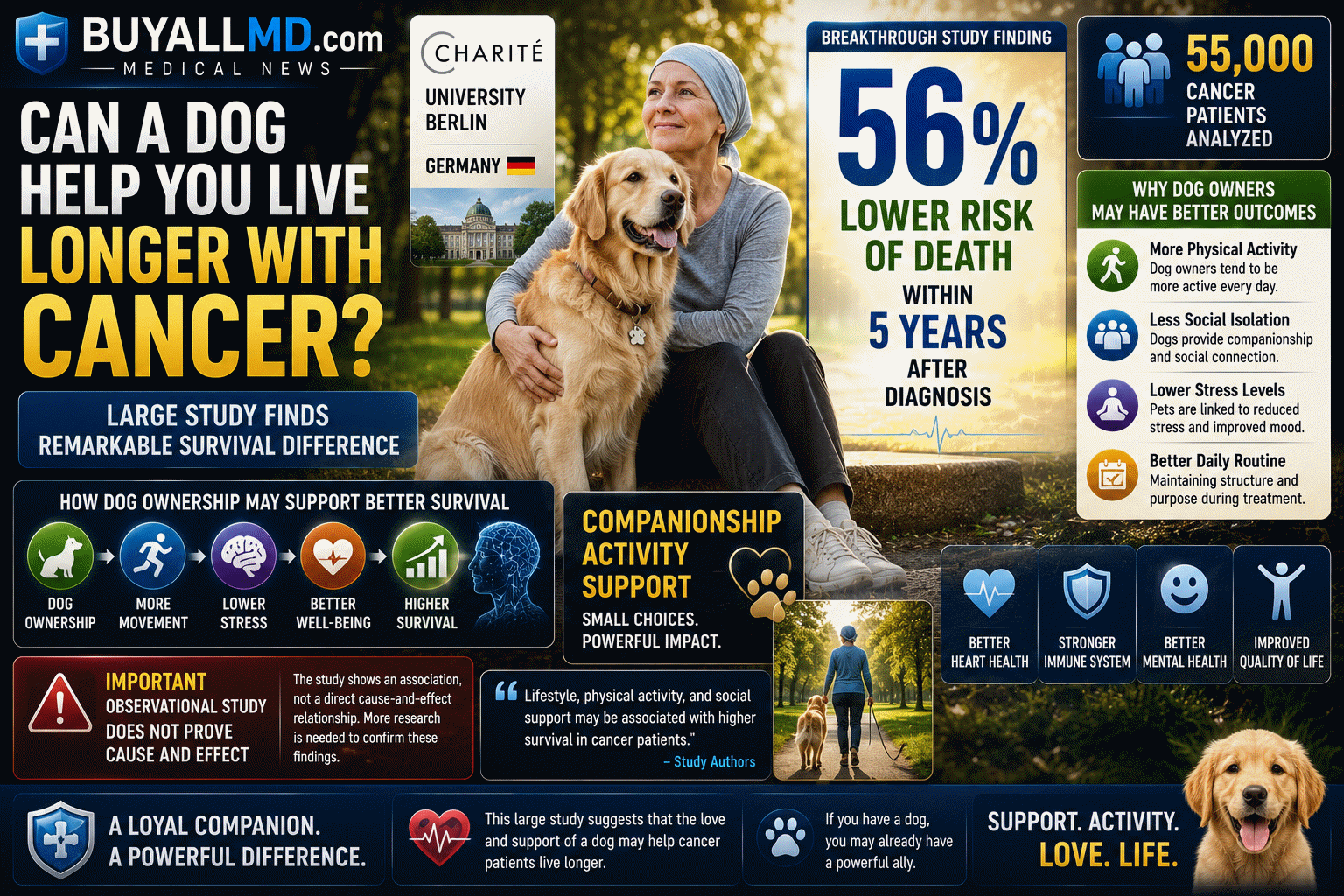
🐕 German researchers found dog owners with cancer had a 56% lower risk of death within five years compared to patients without dogs.
Scientists at Charité — Universitätsmedizin Berlin analyzed data from approximately 55,000 cancer patients. The results showed that dog owners had a 56% lower risk of death within five years of diagnosis compared to patients who did not own dogs.
🔬 The Study: One of the Largest of Its Kind
The research team analyzed data from approximately 55,000 cancer patients, making it one of the largest studies to examine the relationship between pet ownership and cancer survival. Key aspects include:
- Population: Over 55,000 patients with various cancer types
- Comparison: Dog owners vs. non-dog owners
- Outcome: Five-year survival rates after diagnosis
- Key finding: 56% lower mortality risk in dog owners
💡 Key insight: The study included patients with various types of cancer, suggesting that the benefits of dog ownership may apply across different diagnoses, not just specific cancer types.
🧠 Why Might Dog Ownership Help?
The researchers suggest that several factors may explain the observed survival benefit:
🚶
Increased Physical Activity
Dog owners walk more and maintain higher daily activity levels, even during treatment
🤝
Reduced Social Isolation
Dogs provide companionship and social connection, reducing feelings of isolation
😌
Lower Chronic Stress
Interaction with dogs has been shown to reduce cortisol levels and increase oxytocin
🔄
Maintained Routine
Dogs provide structure and purpose, encouraging daily activity even during illness
🌿 Why this matters: “Physical activity, social support, and stress reduction are all factors previously associated with better cancer outcomes. Dog ownership naturally integrates all three.”
⚖️ Strengths and Limitations
✅
Strengths
- Large sample size (55,000+ patients)
- Multiple cancer types included
- Long follow-up period (5 years)
- Real-world data
⚠️
Limitations
- Observational study — causation not proven
- Possible confounding factors
- Dog ownership may reflect other lifestyle factors
- No data on dog size, breed, or interaction frequency
⚠️ Important: The study does not prove that getting a dog causes longer survival. It identifies an association that may be explained by lifestyle differences between dog owners and non-dog owners.
🏥 Clinical Implications: A Holistic Approach
The study highlights the importance of considering lifestyle factors in cancer care. Key takeaways for patients and clinicians:
- Physical activity — even light exercise — is beneficial during cancer treatment
- Social support and emotional connection are important for well-being
- Stress reduction may contribute to better outcomes
- Dog ownership is one pathway to achieving these benefits — not the only one
💡 Practical takeaway: Patients and families should discuss lifestyle factors — including physical activity, social connection, and stress management — as part of comprehensive cancer care.
✅ Key Takeaways
- Dog owners with cancer had 56% lower mortality risk within 5 years
- Possible benefits: more activity, less isolation, lower stress
- One of the largest studies on pet ownership and cancer survival
- Highlights the importance of lifestyle factors in cancer care
- Observational — causation not proven
⚠️ Important Caveats
- Observational study — not causation
- Dog owners may differ in other lifestyle factors
- Not a recommendation to get a dog solely for cancer survival
- Benefits may reflect general lifestyle, not the dog itself
🔬 Scientific References & External Resources
- Charité — Universitätsmedizin Berlin — Lead research institution
- PubMed — Dog ownership and cancer survival
- NCI — Coping with cancer
- WHO — Physical activity guidelines
⚠️ Medical & Research Disclaimer: This article summarizes observational research from Charité Berlin and is for educational purposes only. The study shows an association, not causation. Dog ownership should not be considered a cancer treatment. Always consult your oncology team for personalized medical advice. This information does not constitute medical advice.
© 2026 BuyAllMD.com — Evidence-Based Oncology & Lifestyle Research News
