- Your cart is empty
- Continue Shopping
Stroke Prevention
-
Dr. Tina Sugandh
- Posted on
🧠 Stroke Prevention • Cardiovascular Health • Preventive Medicine
Stroke: How to Reduce Your Risk Before It Happens
📋 Prevention Guidelines • Risk Factors • Screening • 5 min read
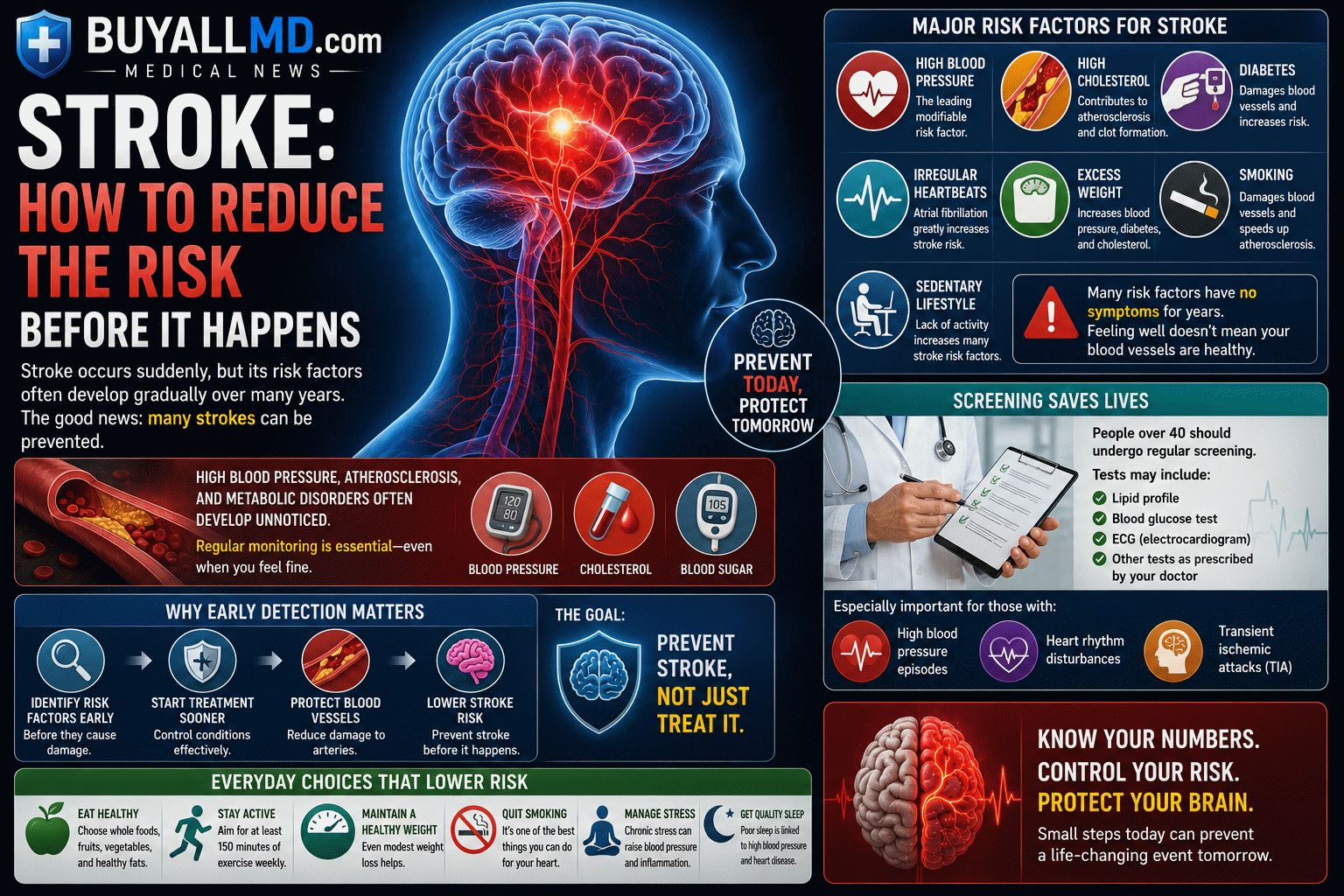
🧫 Stroke strikes suddenly, but its risk factors develop gradually over many years. Prevention is the most powerful tool.
Stroke may occur suddenly, but its risk factors develop gradually over many years. High blood pressure, elevated cholesterol, diabetes, heart rhythm disorders, excess weight, smoking, and a sedentary lifestyle — these are all proven contributors to stroke risk. The danger is that many of these conditions can remain asymptomatic for years, silently damaging blood vessels without any warning signs.
⚠️ The Silent Danger: Why “Feeling Fine” Isn’t Enough
Good health does not necessarily mean healthy blood vessels. Many stroke risk factors are entirely asymptomatic:
- High blood pressure — often called the “silent killer” — rarely causes symptoms until it reaches dangerous levels.
- Atherosclerosis (hardening of the arteries) develops gradually, without pain or discomfort.
- Metabolic disorders like prediabetes and insulin resistance often go undetected.
This is why regular monitoring of blood pressure, cholesterol, and blood sugar is essential — even in the absence of complaints. Early detection of these abnormalities is the key to reducing stroke risk.
💡 The key principle: The primary goal is to prevent stroke — not to treat its consequences. Prevention is always more effective than rehabilitation.
📋 Key Stroke Risk Factors
🩸
High Blood Pressure
The single most important modifiable risk factor
🧬
High Cholesterol
Contributes to atherosclerosis and arterial blockages
🍬
Diabetes
Damages blood vessels and increases clot risk
💓
Arrhythmias
Atrial fibrillation significantly increases stroke risk
⚖️
Excess Weight
Closely linked to hypertension, diabetes, and dyslipidemia
🚬
Smoking
Doubles stroke risk; damages blood vessel walls
🛋️
Sedentary Lifestyle
Increases risk of all cardiovascular events
🩺 Who Should Get Screened and When?
📌 Recommendation: Adults over 40 should undergo regular screening, including:
🧪
Lipid Profile
Measures total cholesterol, LDL, HDL, and triglycerides
🩸
Blood Glucose
Fasting glucose or HbA1c to check for diabetes or prediabetes
📊
Blood Pressure
At least once a year, more frequently if elevated
❤️
ECG / EKG
Detects arrhythmias like atrial fibrillation
High-risk individuals who should be especially vigilant:
- Those with a history of episodes of high blood pressure
- Individuals with heart rhythm disorders or palpitations
- Those who have experienced transient ischemic attacks (TIAs) or mini-strokes
- People with a family history of stroke or cardiovascular disease
✅ What You Can Do Today to Lower Your Stroke Risk
🩺
Know Your Numbers
Get your blood pressure, cholesterol, and blood sugar checked. Don’t rely on how you feel.
🚭
Quit Smoking
Smoking doubles stroke risk. Quitting is one of the most powerful steps you can take.
🥗
Adopt a Heart-Healthy Diet
Reduce salt, saturated fats, and processed foods. Increase fruits, vegetables, and whole grains.
🏃
Stay Active
At least 150 minutes of moderate exercise per week. Even walking makes a difference.
💊
Follow Medical Advice
Take prescribed medications for hypertension, diabetes, or cholesterol as directed.
✅ Key Takeaways
- Stroke risk factors develop gradually over years, often without symptoms.
- High blood pressure, cholesterol, and diabetes are silent but modifiable.
- Regular screening is essential — especially after age 40.
- Prevention is more effective than rehabilitation. Don’t wait for symptoms.
⚠️ Warning Signs of Stroke
- Sudden numbness or weakness (face, arm, leg)
- Sudden confusion, trouble speaking or understanding
- Sudden trouble seeing in one or both eyes
- Sudden difficulty walking or loss of balance
- Sudden severe headache with no known cause
🚨 If you or someone else experiences these — call emergency services immediately.
🔬 Scientific References & External Resources
- WHO — Stroke as a leading cause of death
- CDC — Stroke prevention guidelines
- PubMed — Stroke risk factors research
- American Heart Association — Stroke information
⚠️ Medical Disclaimer: This article is for educational purposes only and does not constitute medical advice. Stroke prevention strategies should be personalized based on individual risk factors. Always consult a qualified healthcare provider for screening, diagnosis, and treatment recommendations.
© 2026 BuyAllMD.com — Evidence-Based Cardiovascular Prevention & Public Health
