
- Your cart is empty
- Continue Shopping
Vegetables and Immunity
-
Dr. Tina Sugandh
- Posted on
🥬 Nutrition Science • Immunology • Gut Microbiome • Public Health
How Everyday Vegetables Support Your Immune System
📋 University of Michigan • Dietary Fiber • Short-Chain Fatty Acids • Microbiome • 6 min read
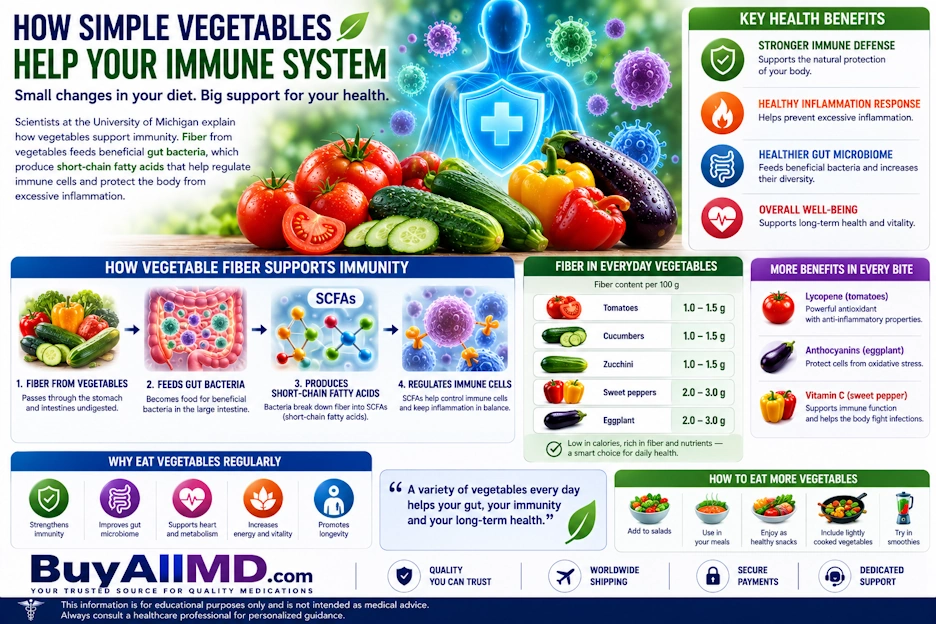
🥬 University of Michigan researchers explain how dietary fiber from vegetables feeds gut bacteria — which in turn regulate immune cells and protect against excessive inflammation.
🥬 The Discovery — How Fiber Supports Immunity
Scientists from the University of Michigan in the United States, in their comprehensive review, have explained the mechanism through which dietary fiber influences the immune system. While fiber itself is not digested by the body, it becomes food for gut bacteria, which break it down into short-chain fatty acids (SCFAs) — compounds that regulate immune cell function and protect the body from excessive inflammation.
This mechanism explains why a fiber-rich diet is consistently associated with lower rates of chronic inflammatory diseases, including cardiovascular disease, type 2 diabetes, and certain cancers.
🦠
Gut Microbiome
Fiber feeds beneficial bacteria
🧬
SCFAs Produced
Short-chain fatty acids regulate immunity
🛡️
Inflammation Control
Protects against excessive inflammation
💡 Key Mechanism: Dietary fiber → gut bacteria → short-chain fatty acids (SCFAs) → regulation of immune cells → reduced inflammation and enhanced immune defense.
🔬 Short-Chain Fatty Acids — The Immune Regulators
When gut bacteria ferment dietary fiber, they produce short-chain fatty acids — primarily acetate, propionate, and butyrate. These compounds play critical roles in immune function:
🛡️
Regulate T-Cells
SCFAs influence the differentiation and function of T-cells, key players in the immune response.
🔥
Reduce Inflammation
SCFAs inhibit inflammatory pathways, protecting against chronic inflammatory diseases.
🧬
Strengthen Gut Barrier
Butyrate specifically strengthens the intestinal barrier, preventing harmful substances from entering the bloodstream.
📊 Fiber Content — How Everyday Vegetables Stack Up
Even non-starchy vegetables with relatively modest fiber content make a significant contribution when consumed regularly. Here’s how common vegetables compare:
| Vegetable | Fiber (per 100g) | Key Bioactive Compounds |
|---|---|---|
| Tomatoes 🍅 | 1.0–1.5 g | Lycopene (antioxidant, anti-inflammatory) |
| Cucumbers 🥒 | 1.0–1.5 g | Flavonoids, silica (skin health) |
| Zucchini 🥒 | 1.0–1.5 g | Carotenoids, vitamin C |
| Bell Peppers 🫑 | 2.0–3.0 g | Vitamin C, flavonoids, carotenoids |
| Eggplant 🍆 | 2.0–3.0 g | Anthocyanins (in skin), powerful antioxidants |
📌 Key Point: These vegetables are low in calories, allowing you to consume more fiber without consuming excess calories — making them ideal for weight management and immune health.
🌿 Beyond Fiber — Antioxidants and Anti-Inflammatory Compounds
In addition to fiber, these vegetables contain other beneficial compounds that work synergistically to support health:
🍅
Lycopene
Found in tomatoes — a powerful antioxidant linked to reduced risk of cardiovascular disease and certain cancers.
🍆
Anthocyanins
Found in eggplant skin — anthocyanins have strong antioxidant and anti-inflammatory properties.
🫑
Vitamin C
Found in bell peppers — essential for immune function, skin health, and antioxidant defense.
💡 Synergy: The combination of fiber + polyphenols + vitamins in vegetables creates a synergistic effect that is greater than the sum of its parts — supporting both the gut microbiome and immune function simultaneously.
🦠 Microbiome Diversity — A Key to Healthy Immunity
Regular consumption of different types of vegetables helps maintain diversity among gut bacteria — which is considered one of the most important factors for a normally functioning immune system.
🦠
Diverse Diet = Diverse Microbiome
Eating a variety of vegetables feeds different strains of beneficial bacteria, promoting greater microbial diversity.
🛡️
Diverse Microbiome = Stronger Immunity
Greater microbial diversity is associated with more robust immune responses and lower risk of inflammatory diseases.
🧬
SCFA Production
Diverse bacteria produce a wider range of SCFAs, each with different immune-regulating properties.
🥗 How to Get More Vegetables in Your Diet
Based on the research, here are practical ways to increase your vegetable intake for better immune support:
- Eat a rainbow — choose vegetables of different colors to get a wide variety of nutrients and polyphenols.
- Add vegetables to every meal — include them in breakfast omelets, lunch salads, and dinner stir-fries.
- Keep them visible — store vegetables in clear containers at the front of your refrigerator so you remember to eat them.
- Experiment with cooking methods — roasting, steaming, grilling, and sautéing bring out different flavors and textures.
- Pair with healthy fats — olive oil, avocado, or nuts enhance absorption of fat-soluble nutrients and antioxidants.
❓ Frequently Asked Questions
How does dietary fiber support the immune system?
Fiber is not digested by the body but is fermented by gut bacteria into short-chain fatty acids (SCFAs). These SCFAs regulate immune cell function and protect against excessive inflammation.
Which vegetables are best for immune health?
A variety of vegetables is best. Tomatoes provide lycopene, eggplants offer anthocyanins, bell peppers are rich in vitamin C, and all provide fiber to feed beneficial gut bacteria.
How much fiber do common vegetables contain?
Tomatoes, cucumbers, and zucchini contain 1–1.5 g of fiber per 100g. Bell peppers and eggplants contain 2–3 g per 100g. Regular consumption of these vegetables adds up to meaningful fiber intake.
What are short-chain fatty acids (SCFAs)?
SCFAs — primarily acetate, propionate, and butyrate — are produced when gut bacteria ferment dietary fiber. They regulate immune cells, reduce inflammation, and strengthen the gut barrier.
Why is microbiome diversity important for immunity?
A diverse microbiome is associated with more robust immune responses and lower risk of inflammatory diseases. Eating a variety of vegetables feeds different bacterial strains and promotes diversity.
📚 References & Resources
- PubMed — Dietary Fiber and Immune Function Research
- University of Michigan — Research
- WHO — Healthy Diet Fact Sheet
- Harvard Nutrition Source — Dietary Fiber
- Frontiers in Immunology — Gut Microbiome and Immunity
⚠️ Medical Disclaimer
This content is for informational and educational purposes only. The research findings discussed are based on scientific studies and do not constitute medical advice. While a diet rich in vegetables supports immune health, it is not a substitute for professional medical care. Always consult a qualified healthcare provider for personalized health advice, especially if you have existing health conditions or are taking medications.
© 2026 BuyAllMD.com — Evidence-Based Nutrition & Immunology News
